Set against a backdrop of faith, power and difficult decisions, the life of Saint Barbara is notable for its intensity. She was no passive figure, nor was her devotion free from conflict. Her story is characterised by confinement and defiance, and by a decision that, in her time, meant standing up to her own family.
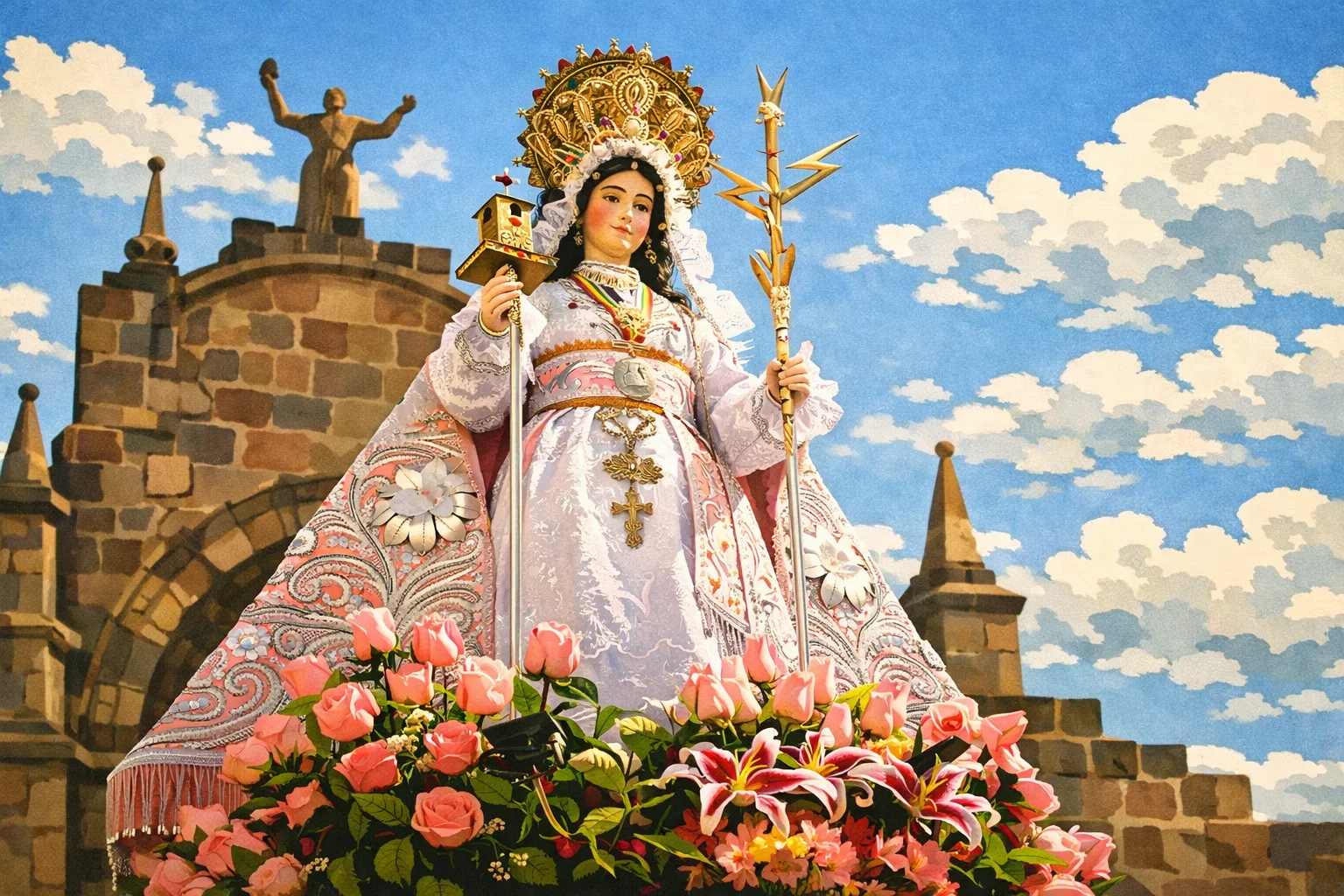
Today, centuries later, her name is still present in many parts of the world. In places like Cusco, for example, her image is part of both the religious calendar and living cultural expressions that connect the past and the present.
But who was Saint Barbara, and why does her story continue to inspire such devotion?
📜 Who was Saint Barbara?
Saint Barbara, also known as Saint Barbara of Nicomedia, is one of the most enigmatic figures in the early history of Christianity.
She is believed to have lived in the third or fourth century, at a time when the Roman Empire was still persecuting Christians.
Her story is set in Nicomedia, an ancient city now located in Turkey. Religion was not only a spiritual matter in that context, but also a political and social one. Adopting a different faith could have serious consequences, ranging from rejection by one’s family to the death penalty.
A young woman who stood out in a time of strict rules
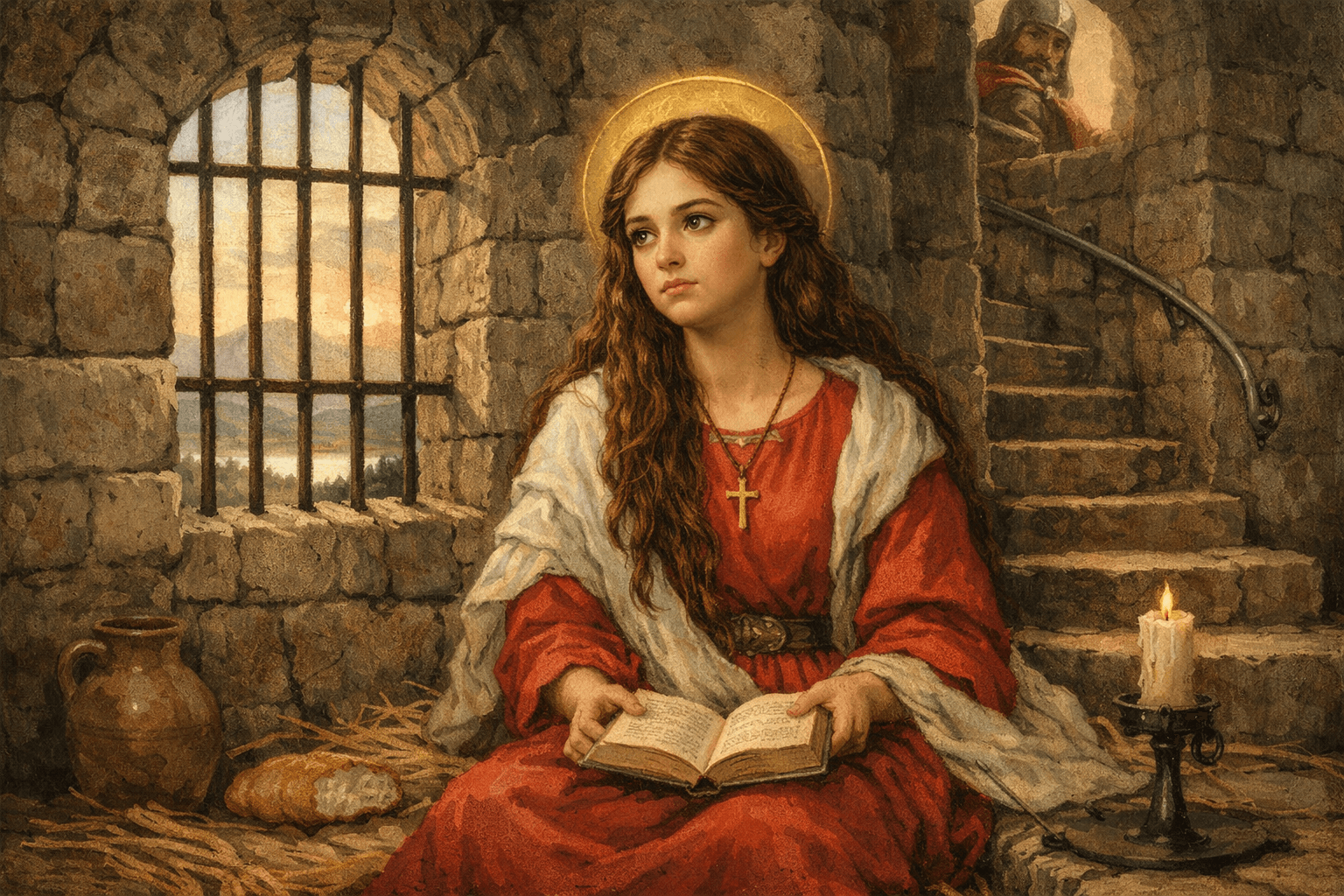
Barbara was the daughter of Dioscorus, one of the most powerful men in Nicomedia, who sought to control every aspect of her life. In an attempt to protect her or rather, isolate her, he locked her away in a tower, cutting her off from the outside world.
However, this confinement did not have the desired effect. Rather than subduing her, it became the starting point for a personal transformation.
Barbara began to question the beliefs imposed on her, and over time she found in Christianity a way of understanding the world that transcended control and fear.
One of the most telling episodes from this period recounts how, during the construction of a bathroom in the tower, Barbara requested three windows instead of two as a symbol of the Holy Trinity. This seemingly simple gesture was an open declaration of her newfound faith.
When her father discovered his daughter’s conversion, he reacted immediately and violently. Beyond the religious aspect, he viewed it as an act of direct disobedience against his authority.
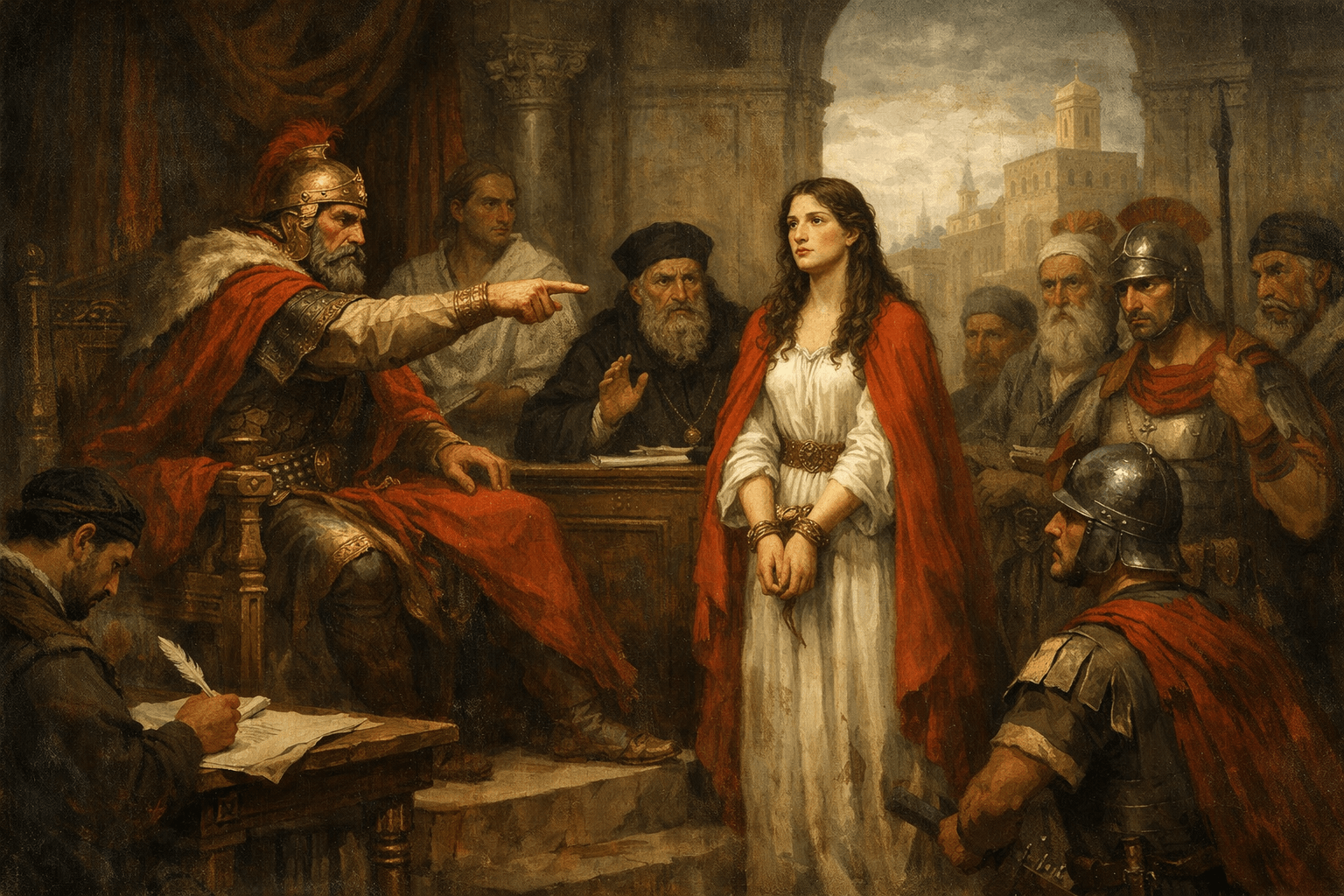
Barbara was denounced and brought before the authorities. There, she was ordered to renounce her faith, but she refused, and was therefore subjected to torture in an attempt to force her to yield.
His death and divine punishment
Ultimately, Barbara was sentenced to death. It is said that her own father carried out the sentence by beheading her.
Shortly afterwards, Dioscorus died after reportedly being struck by lightning. This event was interpreted as divine retribution.
⛈️ Why is Saint Barbara such an important saint?
Following her father’s death, she began to be invoked as a protector against natural phenomena and sudden dangers.
She is associated with lightning, storms, explosions and other unexpected events. It is no coincidence that she is considered the patron saint of artillerymen, miners, firefighters and those who work in hazardous environments in different parts of the world.
In this sense, her presence is spiritual and practical: she represents protection in situations where life can change in an instant.
🙏 The spread of His devotion throughout the world
Devotion to Saint Barbara has spread beyond her place of origin over the centuries. Today, she is venerated in Europe, Latin America and other regions where Christianity has had an impact.
In countries such as Spain, Peru, Mexico and Cuba, her image remains significant and is often associated with local celebrations, rituals or cultural traditions.
In some cases, her cult has merged with local beliefs, taking on new nuances while retaining its essence.
🎆 The Feast of Saint Barbara in Cusco
The Feast of Saint Barbara is celebrated on 4 December, a date recognised by Christian tradition as the day of her martyrdom. Although the exact historical details are unclear, this date has remained constant over time.
Saint Barbara, whose life was marked by strength and resilience, occupies a natural place within this spiritual understanding.
Her role as a protector against dangers and natural phenomena connects well with the Andean worldview, in which nature plays an active and powerful role.
Saint Barbara on Corpus Christi
Santa Bárbara is one of the statues paraded through the city in processions rich in symbolism, music, and tradition as part of one of the most important celebrations on Cusco’s calendar, Corpus Christi.