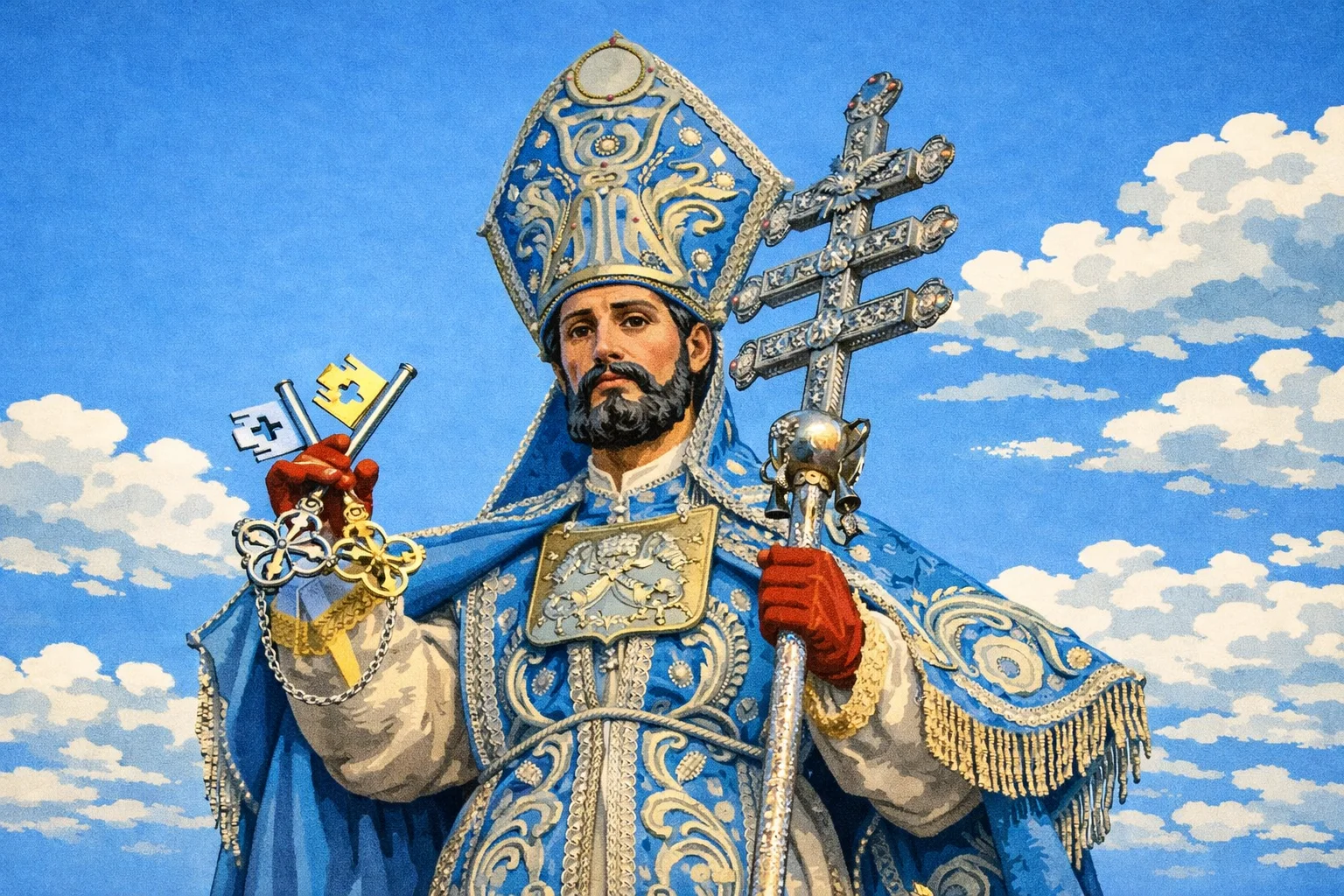
Saint Peter is one of the most important figures in Christianity. Recognised as one of Jesus’s principal apostles, he is also considered to be the first pope of the Church. His life, characterised by faith, mistakes and transformation, established him as a cornerstone of early Christianity.
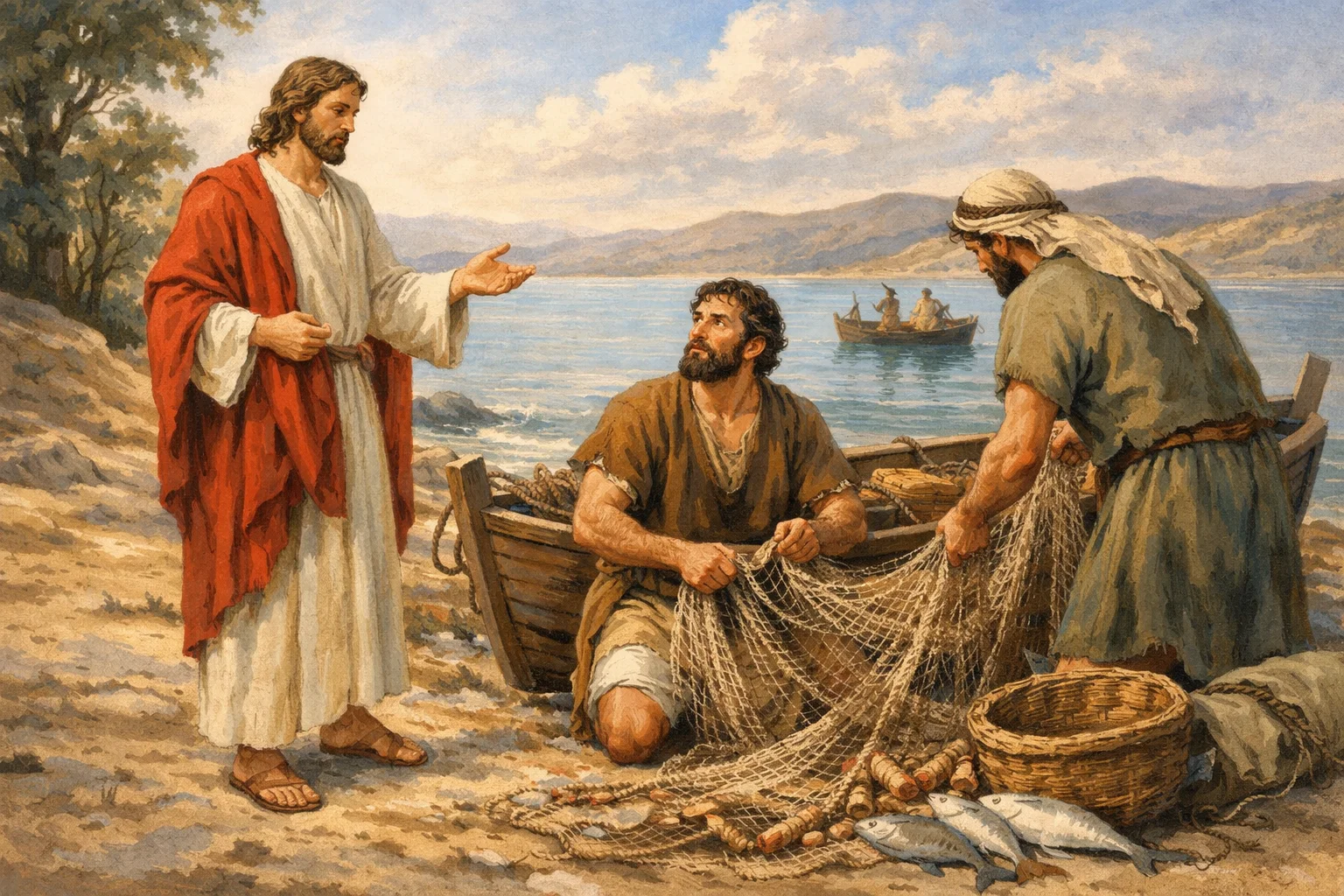
Before becoming a follower of Jesus, he was a humble fisherman named Simon, but meeting Jesus completely altered the course of his life. From that moment on, he played a pivotal role as a leader among the disciples, leaving an indelible mark on religious history.
To better understand his significance, it is important to know who Saint Peter was and how he transitioned from being a fisherman to becoming one of the most influential leaders in Christianity.
📜 Who was Saint Peter?
Before becoming a disciple of Jesus, Saint Peter was named Simon and lived in Galilee, where he worked as a fisherman with his brother, Andrew. His life was simple, centred on his daily work and the customs of his community.
The moment that changed his life came when Jesus called him to follow him, giving him the name Peter, meaning 'rock'.
He then left his trade to become a disciple, embarking on a journey that would make him one of Jesus’s closest followers and, later, a leader of the early Church.
His life as an apostle
Saint Peter was no ordinary disciple. Along with James and John, he was part of Jesus’ inner circle and was present at key moments, such as:
- the time when Jesus revealed his divine nature
- the prayer in the Garden of Gethsemane before his arrest
- various miracles, and important teachings
Furthermore, he was the first to recognise Jesus as the Messiah, marking an important milestone within the group of disciples.
A moment of doubt and faith
One of the most defining moments of his life occurs when he walks on water towards Jesus, but begins to sink as soon as he doubts himself. This moment perfectly symbolises his character: he is impulsive and brave, yet also vulnerable.
The most powerful episode occurs during Christ’s Passion, when Peter denies Jesus three times out of fear. However, he repents deeply after this event, marking a turning point in his life.
Following Jesus' ascension into heaven, Saint Peter assumed a leading role among the apostles. Not only did he preach the Christian message, he also organised the first communities of believers.
His role in Rome
Saint Peter eventually arrived in Rome, where he continued to preach and strengthen the Christian community. The city became an important centre for spreading the faith.
However, during the first century, Christians began to be persecuted by the Roman Empire, particularly during the reign of Emperor Nero. Many believers were punished for holding fast to their faith in this context.
As one of the principal leaders of Christianity, Saint Peter became a prominent figure and a direct target of these persecutions.
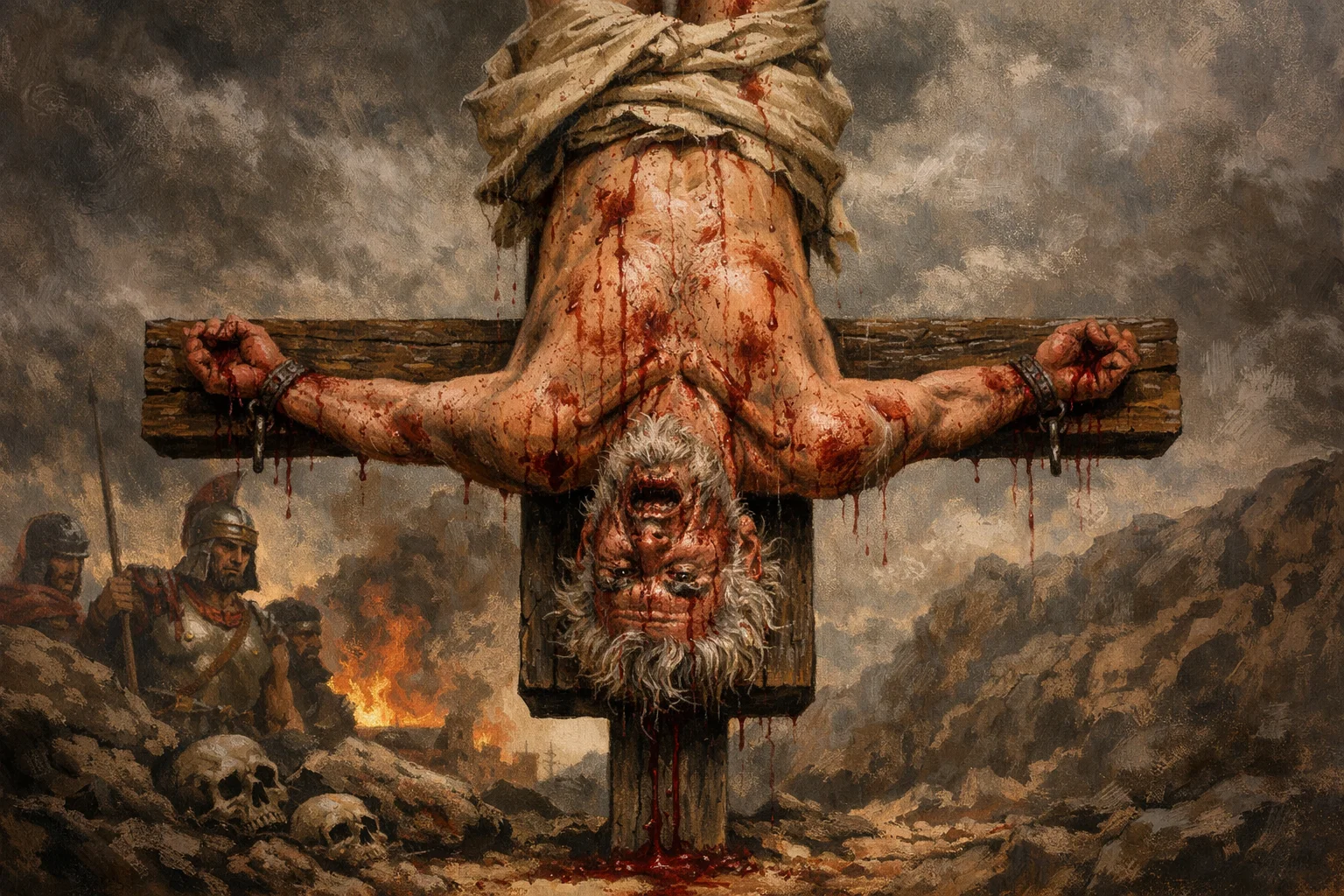
He was sentenced to death by crucifixion. However, he requested to be crucified upside down, as he did not consider himself worthy to die in the same way as Jesus.
🙏 The spread of His devotion throughout the world
From the earliest centuries, Saint Peter was recognised as a key figure in the Christian faith. His story spread throughout communities that viewed him as a model of leadership and commitment.
As Christianity spread across Europe, devotion to him grew stronger, resulting in the construction of churches in his honour and his depiction in religious art.
Saint Peter occupies a central place in the Catholic Church as he is considered the first pope. He represents the origin of a line of leadership that continues to this day.
Furthermore, he is recognised as the patron saint of Rome, which further reinforces his religious and historical importance.
🎆 The Feast of Saint Peter in Cusco
In the city of Cusco, devotion to Saint Peter is particularly strong in the historic centre, especially around the Church of Saint Peter, one of the city’s most important colonial churches.
Located just a few minutes from the Plaza de Armas, this 17th-century church is part of Cusco’s historical heritage.
On 29 June, the festivities centre around this church, where masses and religious ceremonies are held in honour of the saint.
While not one of Cusco’s largest festivals, the San Pedro celebrations are still very significant. Religious activities bring together the faithful and local residents, helping to keep the tradition alive.
Visitors have the opportunity to experience a more authentic side of the city here, where history, faith and daily life converge.