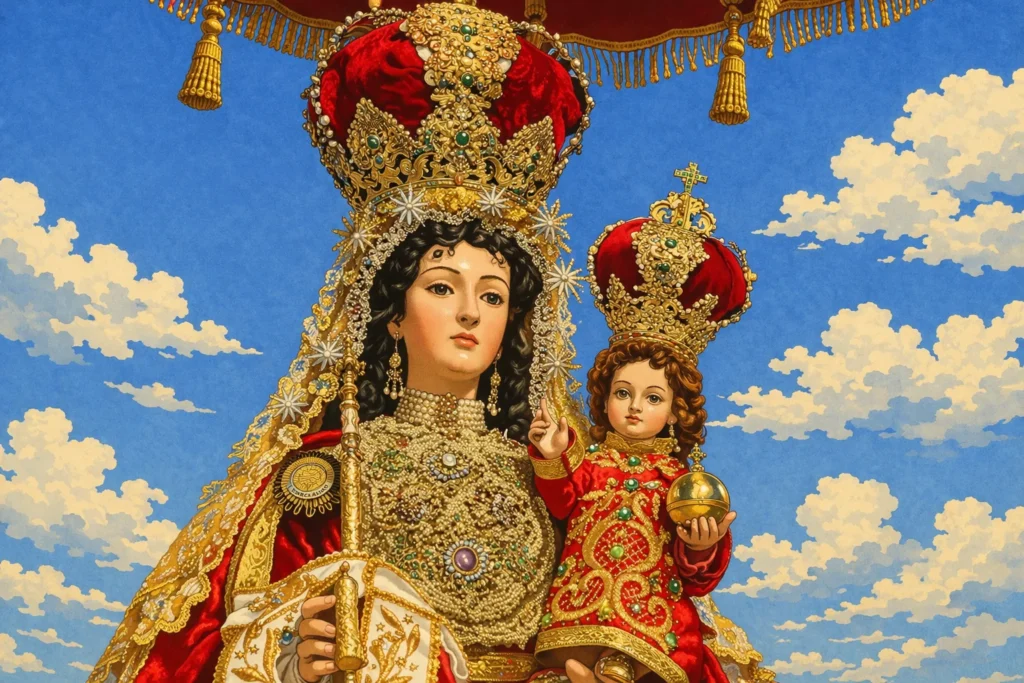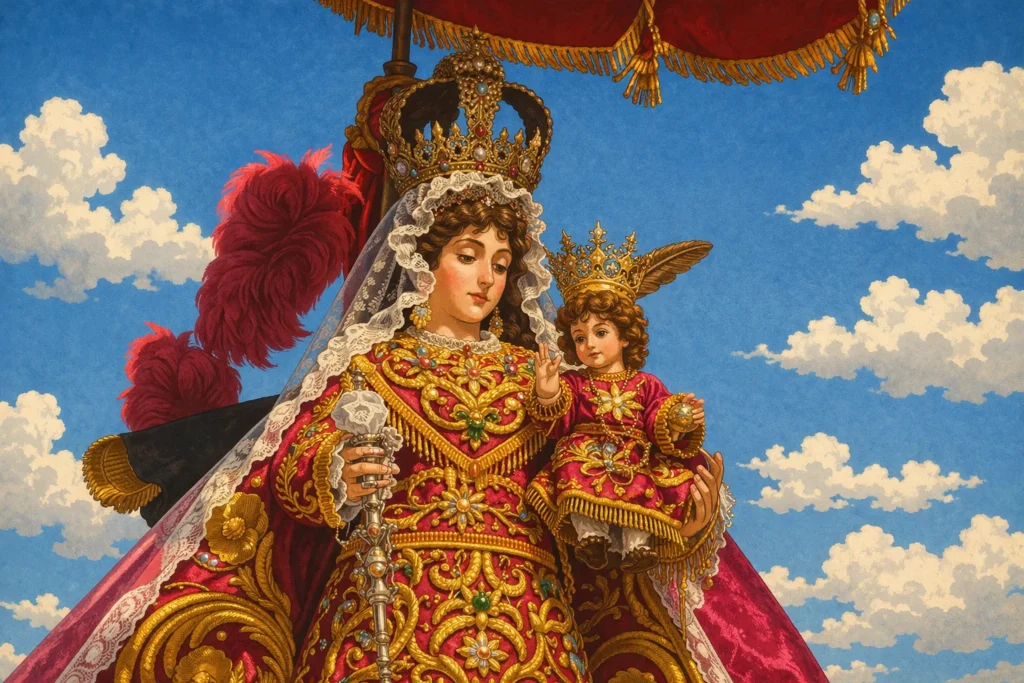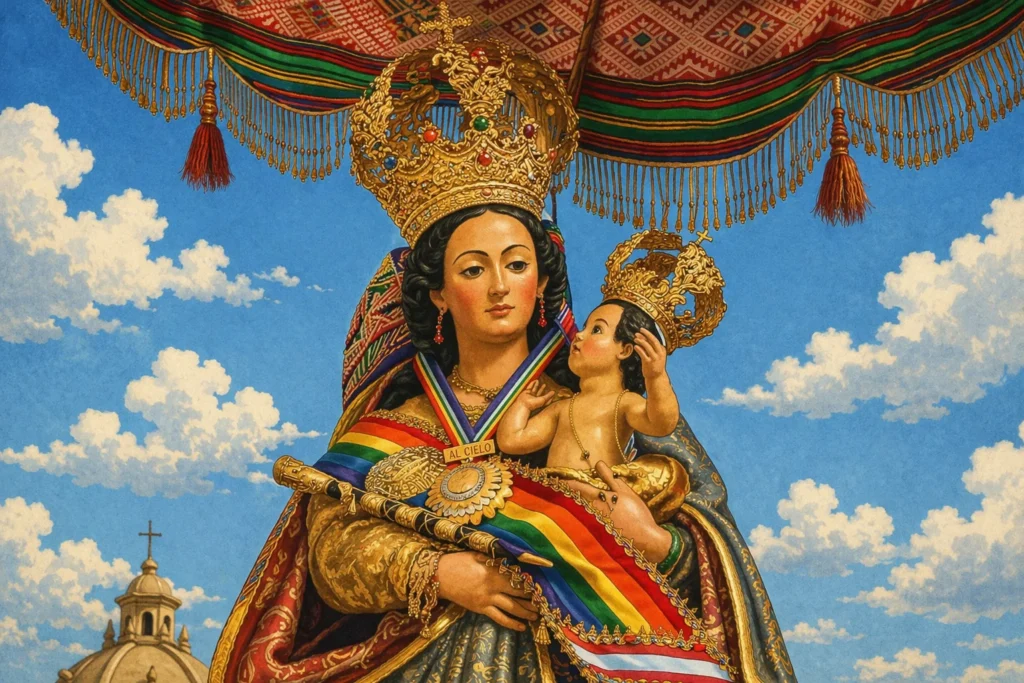
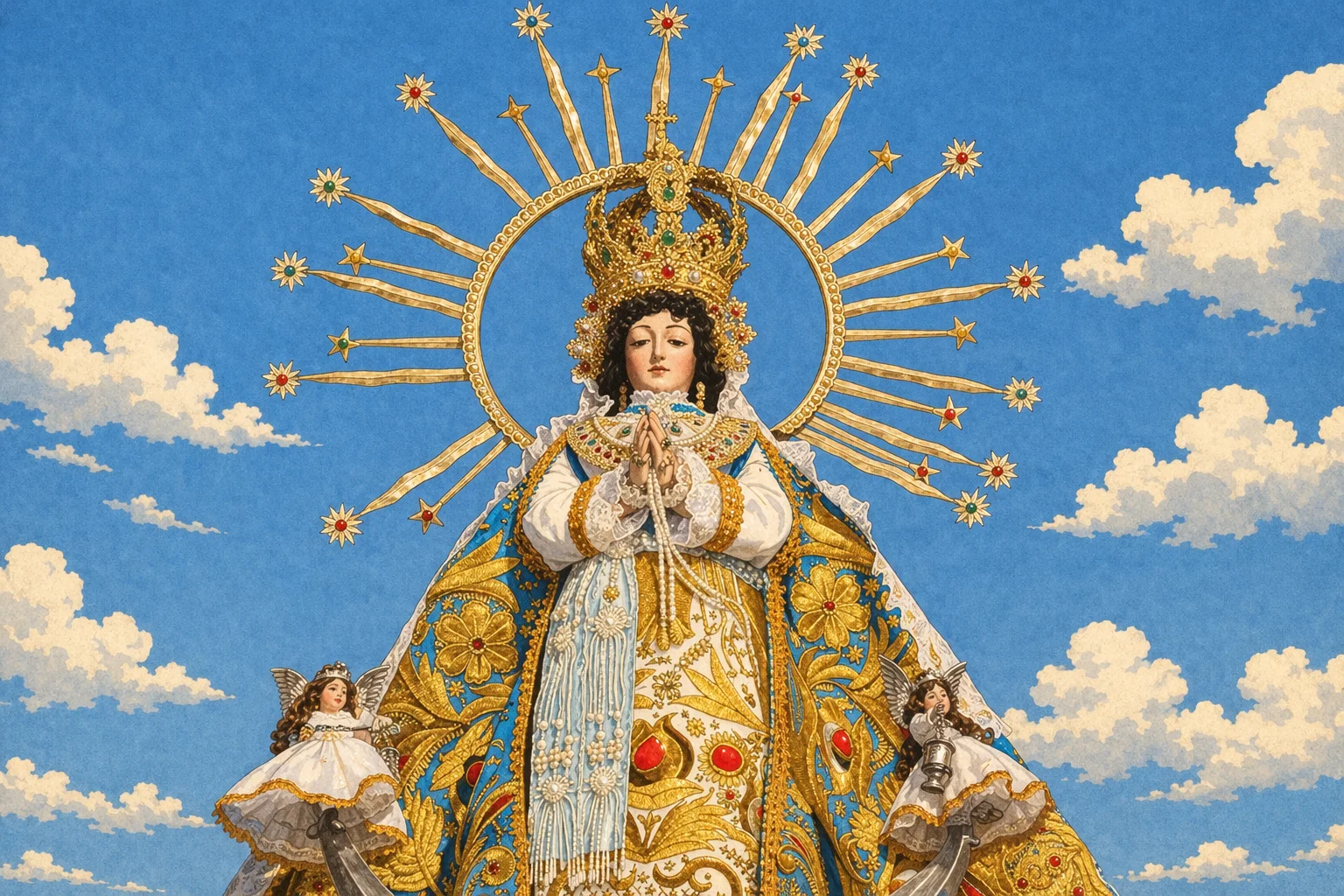
Every December, various cities and communities in Cusco come alive with religious celebrations blending faith, music and tradition. One of the most significant Marian devotions in the Catholic world is the celebration of the Virgin of the Immaculate Conception, a figure who has been a constant presence in churches and popular festivals for centuries.
Beyond the festivities, however, the Immaculate Conception represents one of the most significant beliefs concerning the Virgin Mary within Catholicism.
📜 Who is the Virgin of the Immaculate Conception?
The title 'Virgin of the Immaculate Conception' refers to the belief that the Virgin Mary was conceived without original sin.
Although this idea had been present within the Christian tradition for centuries, it gradually evolved until it became one of the most important Catholic Church doctrines related to Mary.
What does “Immaculate Conception” mean?
The term 'immaculate' refers to purity, while 'conception' relates to the moment Mary was conceived.
According to Catholic doctrine, the phrase 'Immaculate Conception' represents the belief that Mary was born free from original sin, setting her apart from the rest of humanity.
📖 History of the Virgin of the Immaculate Conception
The concept of the Immaculate Conception emerged during the early centuries of Christianity. Since ancient times, various thinkers and religious communities had reflected on Mary's role in relation to original sin.
Over time, the idea emerged that the Virgin Mary had been conceived without sin from the moment of her conception. This belief gained significant momentum during the Middle Ages, particularly in Spain, where devotion to the Immaculate Conception became one of the most important forms of religious expression.
A pivotal moment came on 8 December 1854, when Pope Pius IX officially proclaimed the dogma of the Immaculate Conception in the papal bull Ineffabilis Deus. Since then, 8 December has been established as one of the most important Marian celebrations within the Catholic Church.
From the 16th century onwards, religious orders and authorities associated with the Spanish Viceroyalty introduced this devotion to various regions across the continent. Churches, convents and communities began to adopt the Immaculate Conception as a protective figure and a symbol of spiritual purity.
The arrival of the Immaculate Conception in Cusco is associated with the evangelisation that took place during the 16th and 17th centuries.
Churches and religious communities helped to spread this devotion throughout the city and the surrounding provinces. Over time, 8 December became an established date on Cusco’s religious calendar.
Gradually, the festival expanded beyond church settings, becoming part of local traditions and blending with the region’s unique cultural expressions.
🎆 The Feast of the Virgin of the Immaculate Conception in Cusco
The Feast of the Immaculate Conception, one of the most important Marian feasts on the Catholic calendar, is celebrated every year on 8 December.
Acomayo is one of the places where this feast day is still celebrated with great enthusiasm, with the community actively participating in religious activities, processions and traditional gatherings.
The streets are filled with music, family gatherings and cultural celebrations. This atmosphere combines spirituality with strong community participation, a feature common to many festivals in Cusco.
Our Lady of the Immaculate Conception on Corpus Christi
The Virgin of the Immaculate Conception plays a prominent role in Cusco’s Corpus Christi festival, which is one of the city’s most important religious and cultural events.
During the celebrations, images of various saints and virgins are carried from their churches to the historic centre, where they take part in processions that attract thousands of people, including the faithful, musicians, dancers and visitors.