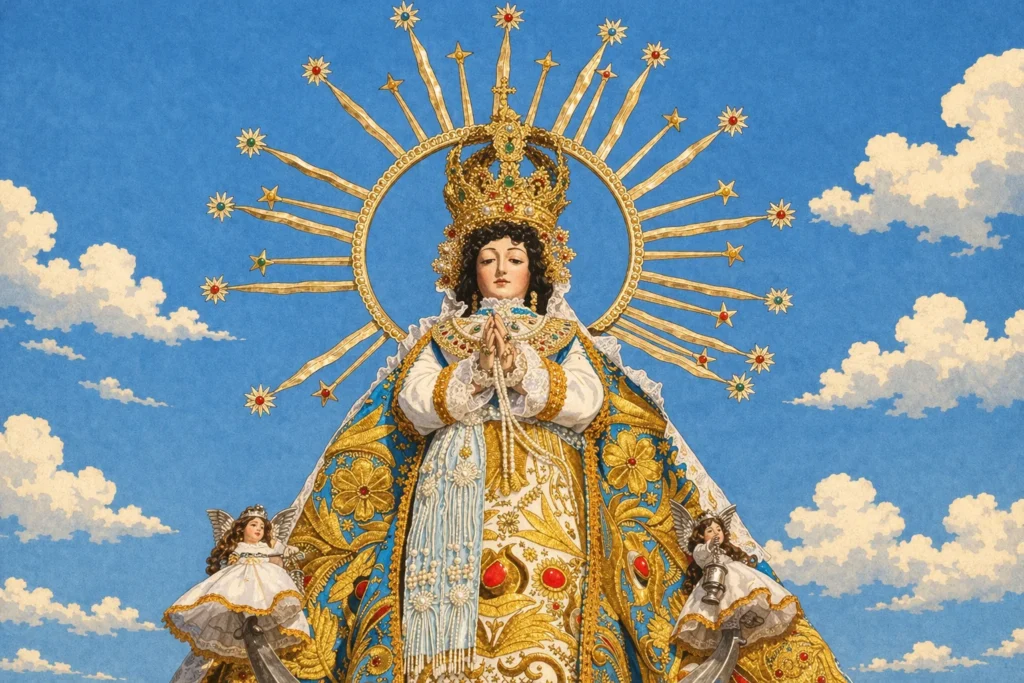
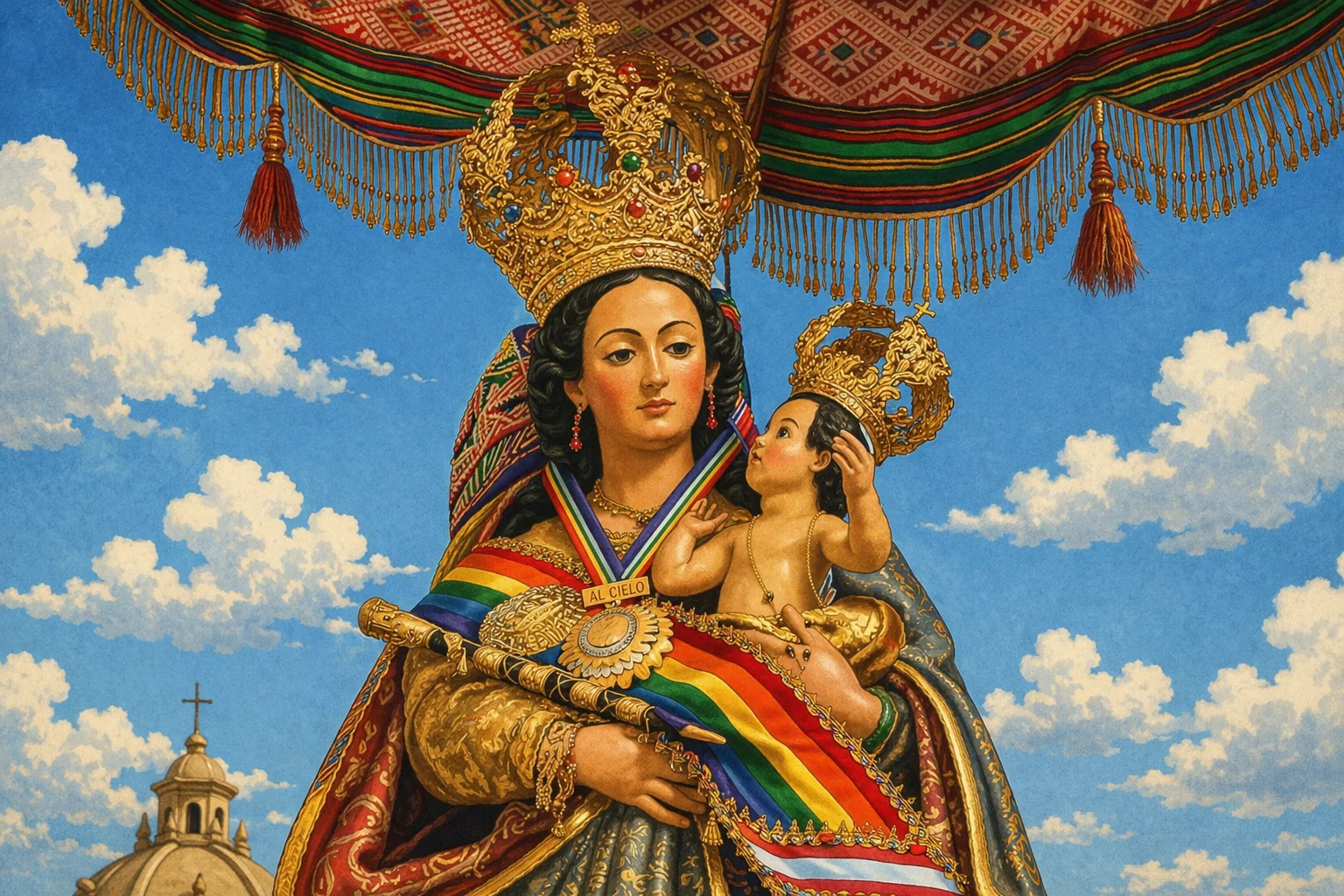
In Cusco, many celebrations are not just understood in religious terms, but also through the way the community experiences them. Some images become familiar and are ultimately embraced as part of the identity of those who grow up with them, almost like family. One such image is the Virgin of the Nativity, affectionately known as Mommy Nati.
Devotion to her is not confined to a particular location or date. Rather, it extends across different parts of Cusco, taking on special significance during celebrations where faith blends with music, dance and communal gatherings. But who is the Virgin of the Nativity really, and why does she inspire such a deep sense of connection?
📜 Who is Virgin of the Nativity?
The Virgin of the Nativity, often called Mommy Nati, is a Marian title referring to the birth of the Virgin Mary. In Christian tradition, this event is celebrated as a pivotal moment because it marks the beginning of the story that led to the birth of Jesus.
📖 The History of Virgin of the Nativity
Devotion to Virgin of the Nativity originated in Cusco during the colonial era, when various Marian devotions were introduced as part of the evangelisation process. As with many religious images, she was initially present only in churches, but gradually grew closer to the people.
Unlike other representations that focus on specific episodes in Mary's life, this devotion centres on her origins, her arrival in the world. For this reason, her image is often associated with concepts such as beginnings, hope and renewal.
Its development during the colonial era
During the colonial period, Cusco underwent a process of cultural transformation, during which Andean beliefs began to intertwine with Catholicism.
It was in this context that the Virgin of the Nativity established herself as a significant figure.
Over the years, she gained greater prominence, especially through celebrations that brought entire communities together.
Her feast day became an occasion for people to come together and express their faith in spiritual, social and cultural ways.
🙏 Why is Virgin of the Nativity such an important saint?
In Cusco, the Virgin of the Nativity is more than just a religious figure; she is an integral part of many communities' identity. Devotion to her is deeply interwoven with the way people understand their history, traditions and celebrations.
She has a strong presence in many parts of Cusco, particularly in communities where tradition is still very much alive. In places such as Chincheros and Huayllabamba, her feast day is celebrated with great enthusiasm, making it one of the most significant events of the year.
🎆 The Feast of Vrigin of the Nativity in Cusco
The Feast of Our Lady of the Nativity is celebrated on 8 September, which is the date on which the Catholic Church commemorates the birth of the Virgin Mary.
During the festivities, the atmosphere changes completely. The streets come alive with activity, local residents help organise the events, and the festival becomes a place where people come together for both religious and social reasons.
Virgin of the Nativity on Corpus Christi
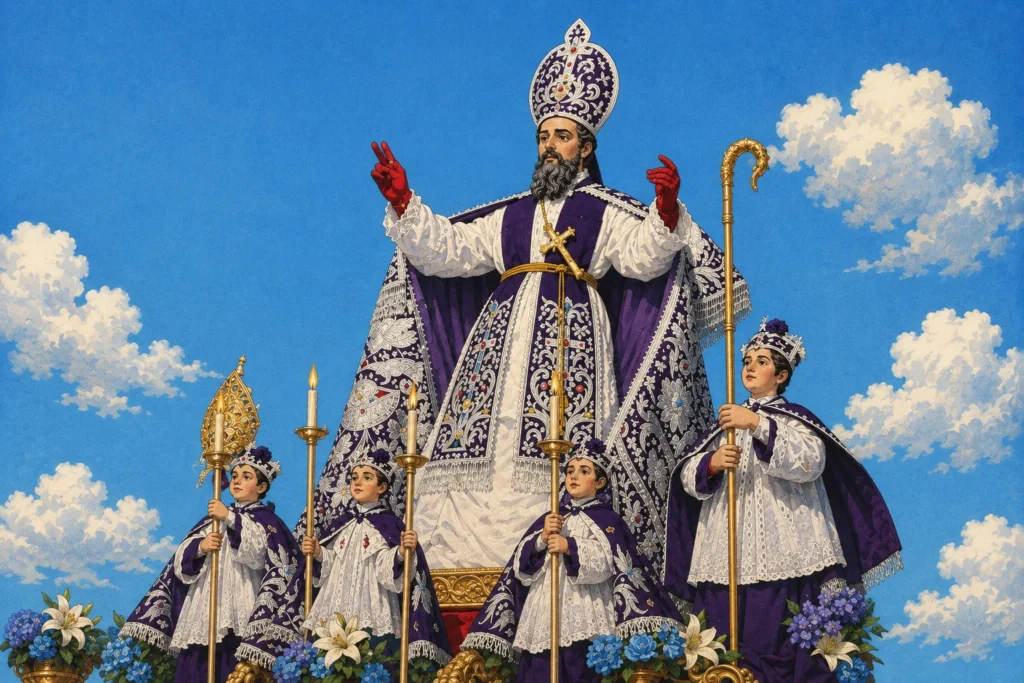
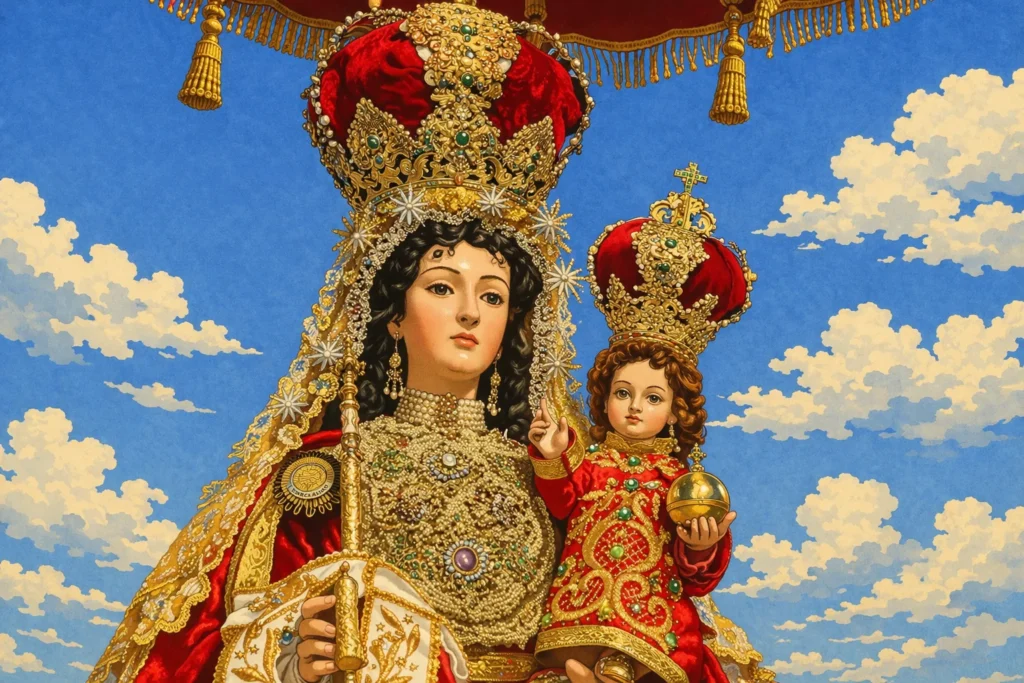
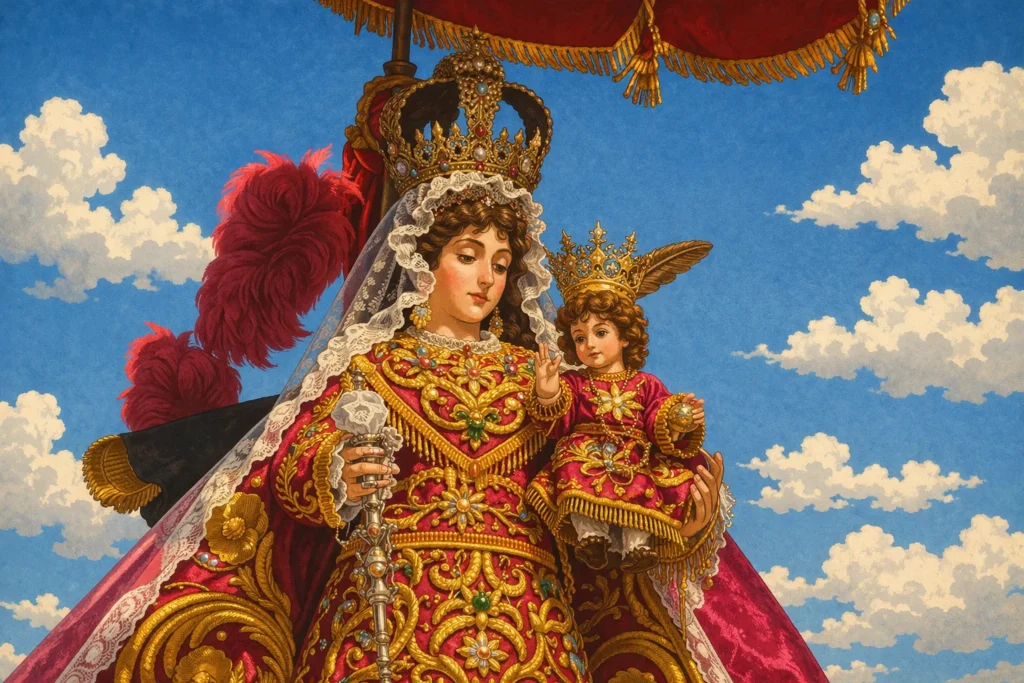
During the Corpus Christi festivities, the statue of the Virgin of the Nativity takes part in one of the city’s most important processions. Although her prominence may vary compared to that of other figures, her presence remains significant along the route.
Each statue represents a community and neighbourhood, as well as a unique history.