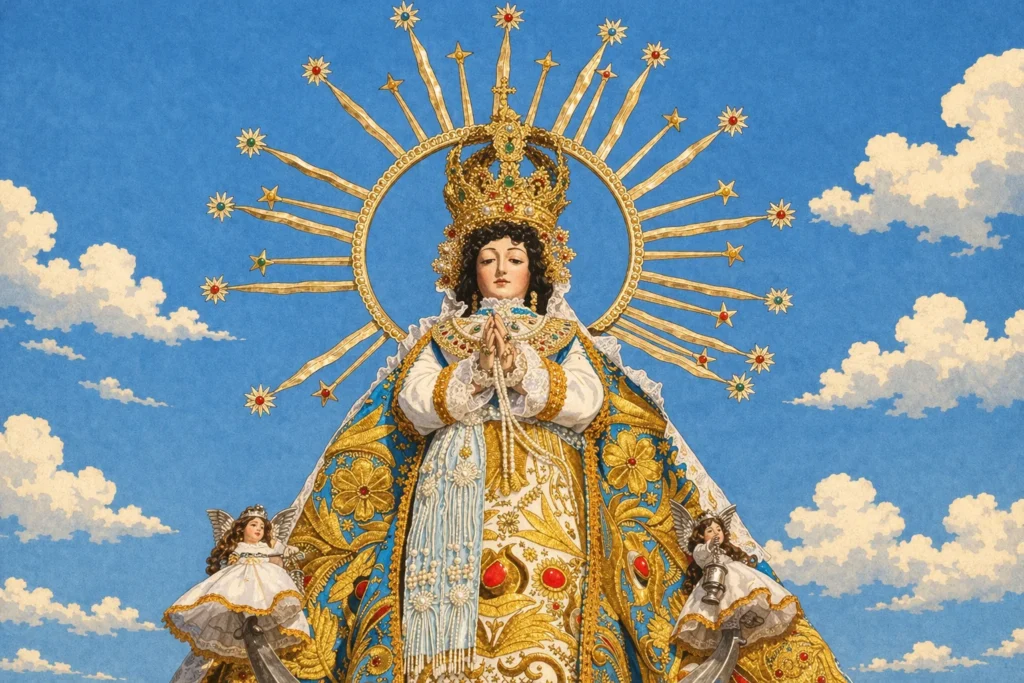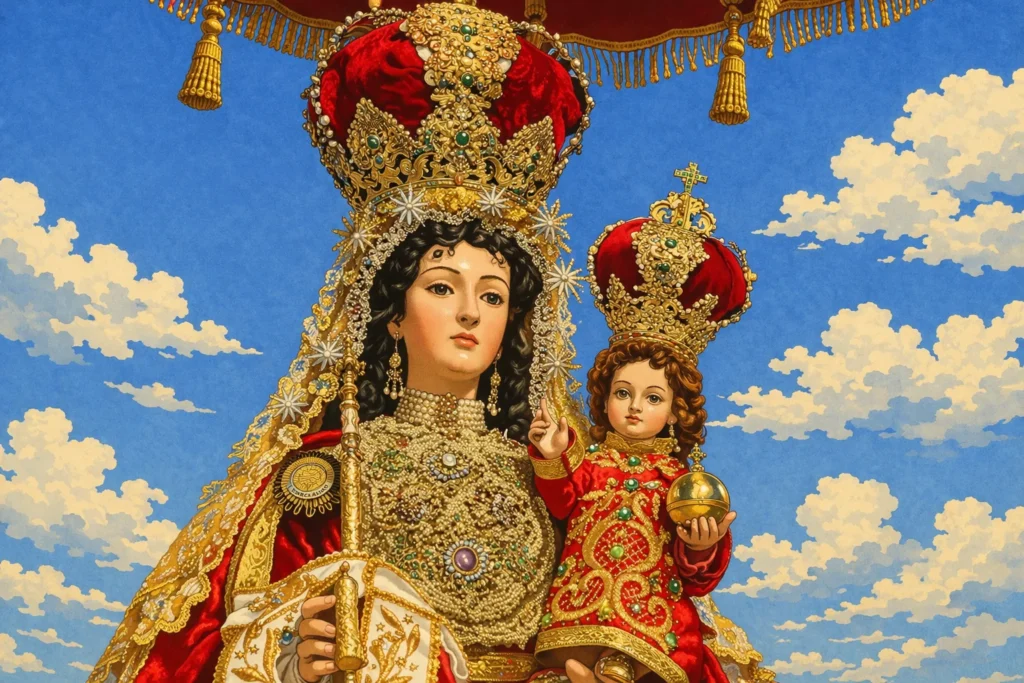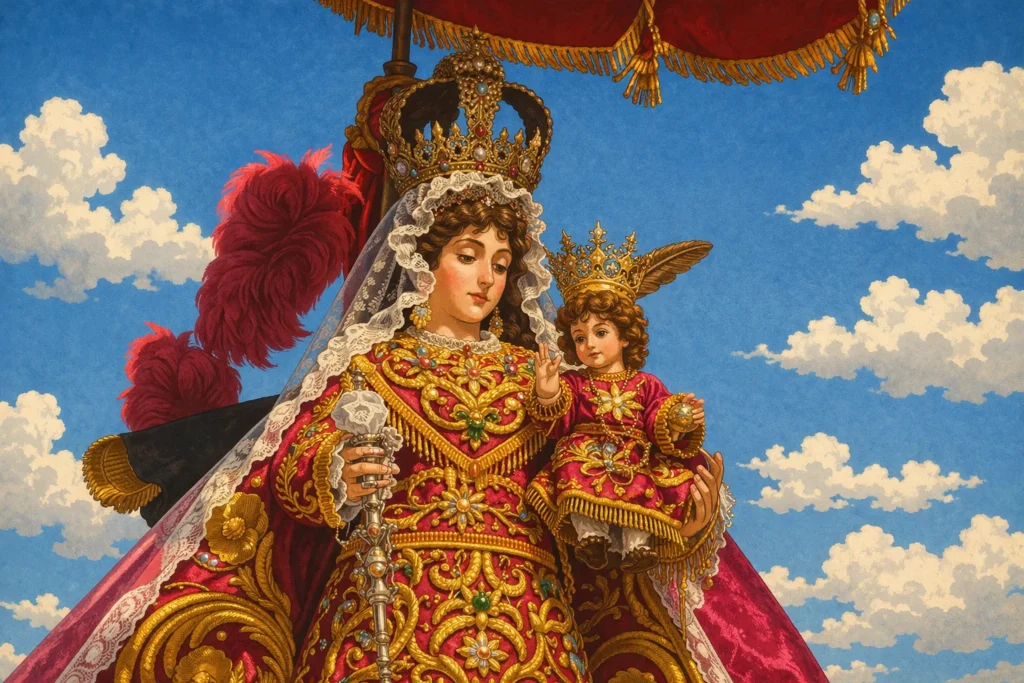
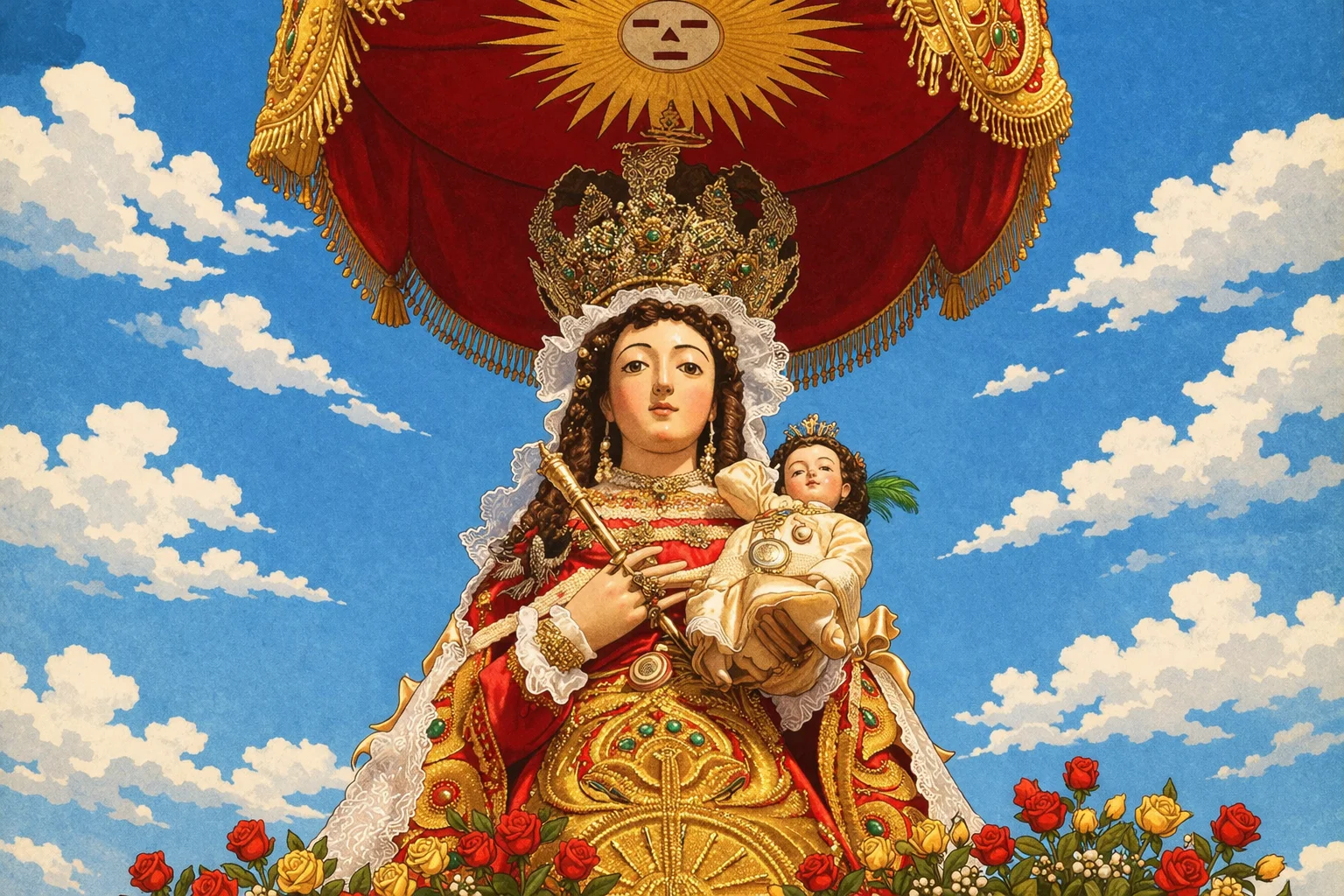
Within this world of devotions, one figure stands out for her closeness to the people and her deep connection to the city: the Virgin of Bethlehem, also affectionately known as Mamacha Belén.
Her story is not just religious. It is intertwined with the colonial past, the cultural transformation of Cusco and a tradition that endures to this day. For many, she is a protector, while for others she is a symbol of identity.
📜 Who is the Virgin of Bethlehem?
Our Lady of Bethlehem is a Marian title depicting the Virgin Mary in connection with the birth of Jesus. It makes direct reference to Bethlehem, the place where, according to Christian tradition, this event took place. She is associated with motherhood, protection and care, elements that have been central to her veneration throughout history.
Although this devotion originated in the European Christian world, it arrived in the Americas during the colonial era, adapting to new cultural contexts. In Cusco, for example, the figure was not only adopted, but also reinterpreted by the local population.
Why is she called “Mamacha Belén”?
In Cusco, religious figures are often given more familiar and affectionate names. The term 'Mamacha' comes from the Quechua language and is used as a term of respect and affection for maternal or protective figures. “Mamacha” proviene del quechua y se utiliza como una forma de respeto y cariño hacia figuras maternas o protectoras.
- Mama = Mom
- cha = a Quechua diminutive
Mamacha = Mommy
📖 The History of the Virgin of Bethlehem in Cusco
The history of the Virgin of Belén in Cusco dates back to the colonial era, when religious orders and Spanish authorities introduced various Marian devotions as part of the process of evangelising the local population.
It was in this context that the image of the Virgin of Bethlehem arrived in the city and was placed in the neighbourhood now known as Belén.
During the colonial period, Cusco underwent a profound transformation. Andean beliefs began to intertwine with imposed Catholicism, resulting in new forms of religiosity.
It was in this setting that the Virgin of Bethlehem took on a special role.
Rather than being merely an image brought from Europe, she was adopted by the indigenous and mestizo populations, who reinterpreted her meaning through their own worldview.
Over time, devotion to the Virgin of Belén took root, particularly in times of crisis. According to tradition, her intercession was invoked during epidemics, disasters and challenging times, thereby strengthening the belief in her protective power.
🎆 The Festival of the Virgin of Bethlehem in Cusco
The main festival in honour of the Virgin of Belén is celebrated on 20 January and is one of the most important events for her devotees in Cusco. This date not only marks a religious ceremony, but also a deeply rooted tradition in the city.
During this time, the Belén neighbourhood and other nearby areas are filled with activity. The city's rhythm changes, with religious and social life blending together naturally.
Virgin of Bethlehem on Corpus Christi
During the Corpus Christi festival, the Virgin of Bethlehem occupies a special place as one of the city’s most iconic figures. Unlike other figures, her presence is particularly significant due to her close link with Cusco’s identity and her status as the city’s patron saint.