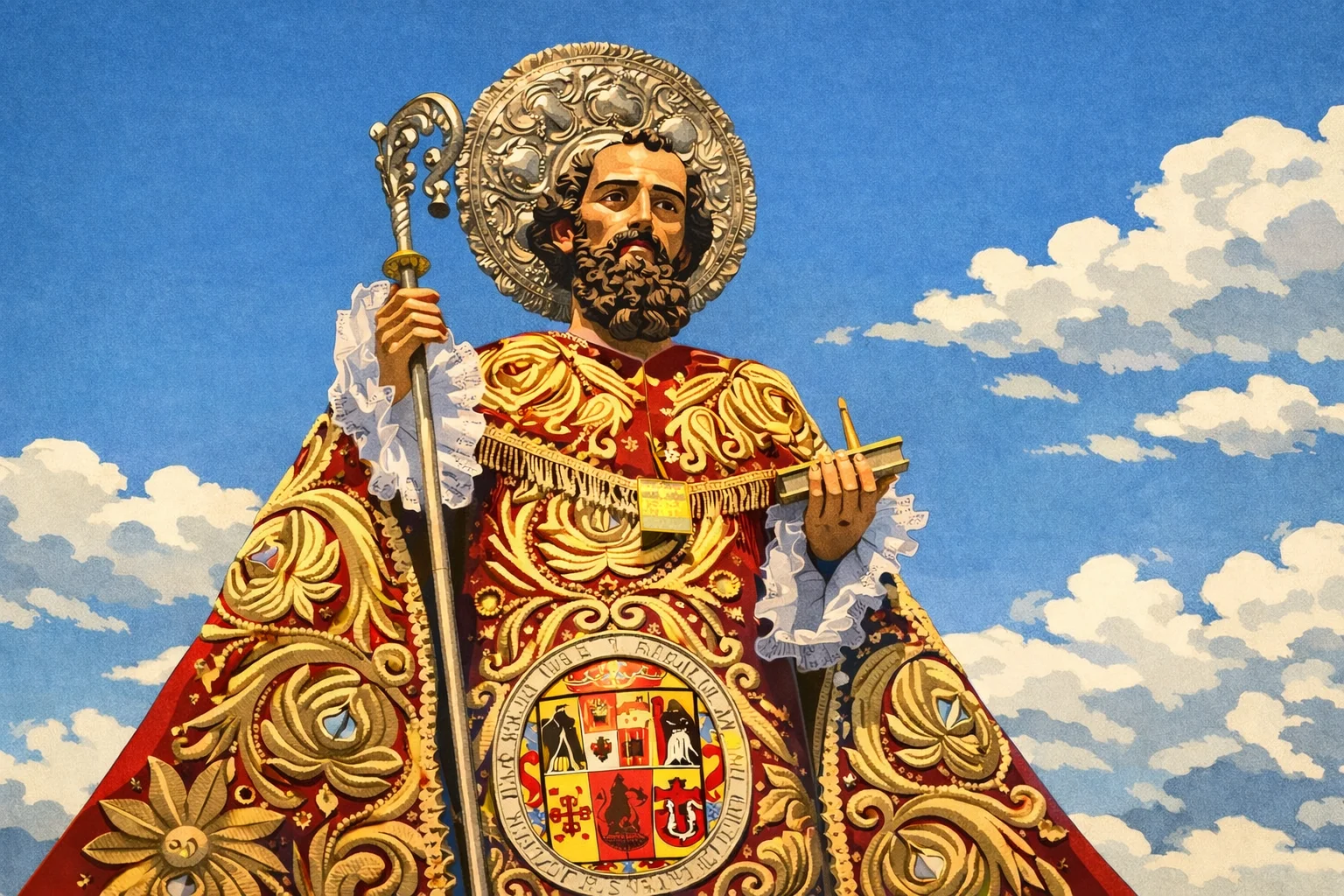
Saint Anthony the Great is one of the most important figures in early Christianity. Known as the father of monasticism and the patron saint of animals, he devoted his life to prayer and spiritual retreat in the Egyptian desert. His example inspired many others to embrace a life of discipline and faith.
Over time, his legacy has given rise to deep devotion and various popular traditions. His feast day, celebrated every 17 January, is part of the cultural calendar in the Cusco region, where faith and tradition keep his legacy alive.
📜 Who was Saint Anthony the Abbot?
Saint Anthony the Great was born around 251 AD in a region near Heracleopolis Magna in Egypt, into a Christian farming family. At that time, Christianity was still spreading throughout the Roman Empire and many communities practised their faith amid challenges and persecution.
Anthony, however, grew up in a relatively stable environment with financial resources, as his family owned land and property. Nevertheless, from a young age, he was known for leading a simple life and for his deep interest in the Christian faith.
During his youth, he frequently attended gatherings of the local Christian community, where he listened to Gospel teachings. These teachings would later have a profound influence on the decisions that shaped his life.
The death of his parents and the onset of his responsibilities
When Antonio was around twenty years old, his parents died, leaving him responsible for his younger sister and the management of the family estate. He suddenly found himself with significant responsibilities regarding the family’s lands and property.
During this period, he continued to play an active role in the religious life of his community. However, his life took a decisive turn after he heard a passage from the Gospel that left a deep impression on him.
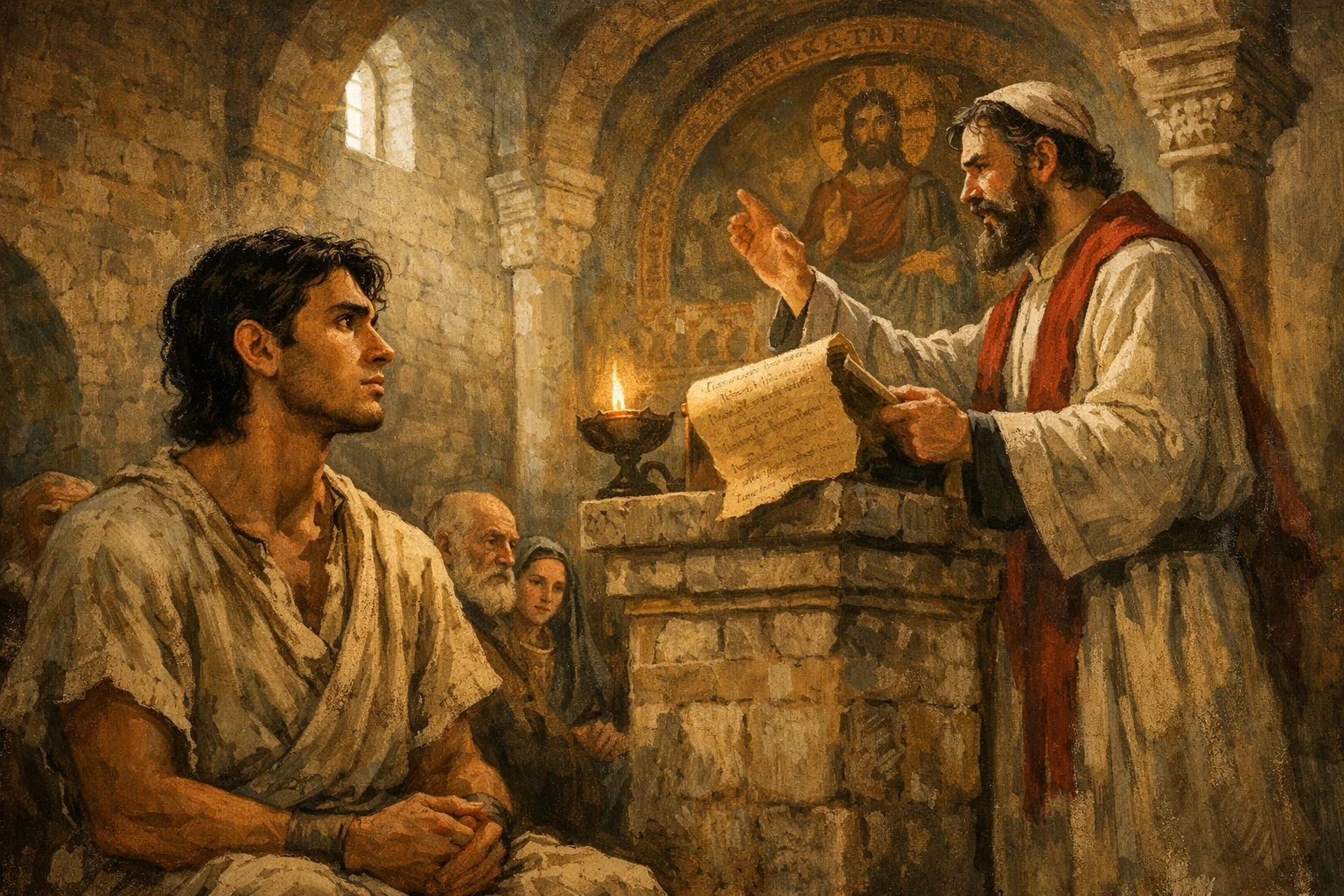
According to Christian tradition, one day, during a reading in church, he heard the words of Jesus recorded in the Gospel of Matthew:
"If you wish to be perfect, go, sell what you have, give it to the poor, and you will have treasure in heaven; then come and follow me"..
He interpreted these words as a personal call. Convinced that he had to follow the message literally, he decided to give most of his inheritance to the poor in his community.
He also made sure that his sister was placed in the care of a group of Christian women dedicated to religious life.
The beginning of his life as a hermit
After giving away his possessions, Anthony began living in seclusion near his village. During this time, he sought to learn from other Christians who practised asceticism, that is, a life characterised by discipline, fasting and prayer.
Over time, he gradually withdrew further and further into the desert, which many believers considered the ideal place for contemplation and encountering God.
There, he adopted a life of austerity based on constant prayer, manual labour and spiritual reflection.
Although he intended to live in solitude, his reputation began to spread. People from far and wide came to him, either seeking spiritual counsel or simply wishing to learn from his way of life. Thus, unintentionally, Saint Anthony the Abbot became a role model for others who wished to follow a similar path of retreat and religious devotion.
⛪ The Birth of the First Monastic Communities
These groups, which emerged following Saint Anthony the Great's example, were not yet organised monasteries like those that would exist centuries later. However, they represented one of the earliest forms of communal, spiritual Christian life.
For this reason, Anthony is remembered as the father of Christian monasticism, as his way of life inspired the subsequent development of religious communities around the world.
🐽 Why is Saint Anthony the patron saint of animals?
Over the centuries, Saint Anthony the Abbot has become recognised as the patron saint of animals, a tradition now integral to many celebrations in his honour. San Antonio Abad comenzó a ser reconocido como el patrono de los animales, una tradición que hoy forma parte de muchas celebraciones en su honor.
This association stems from ancient stories about his life and symbols that became widespread in Christian tradition.
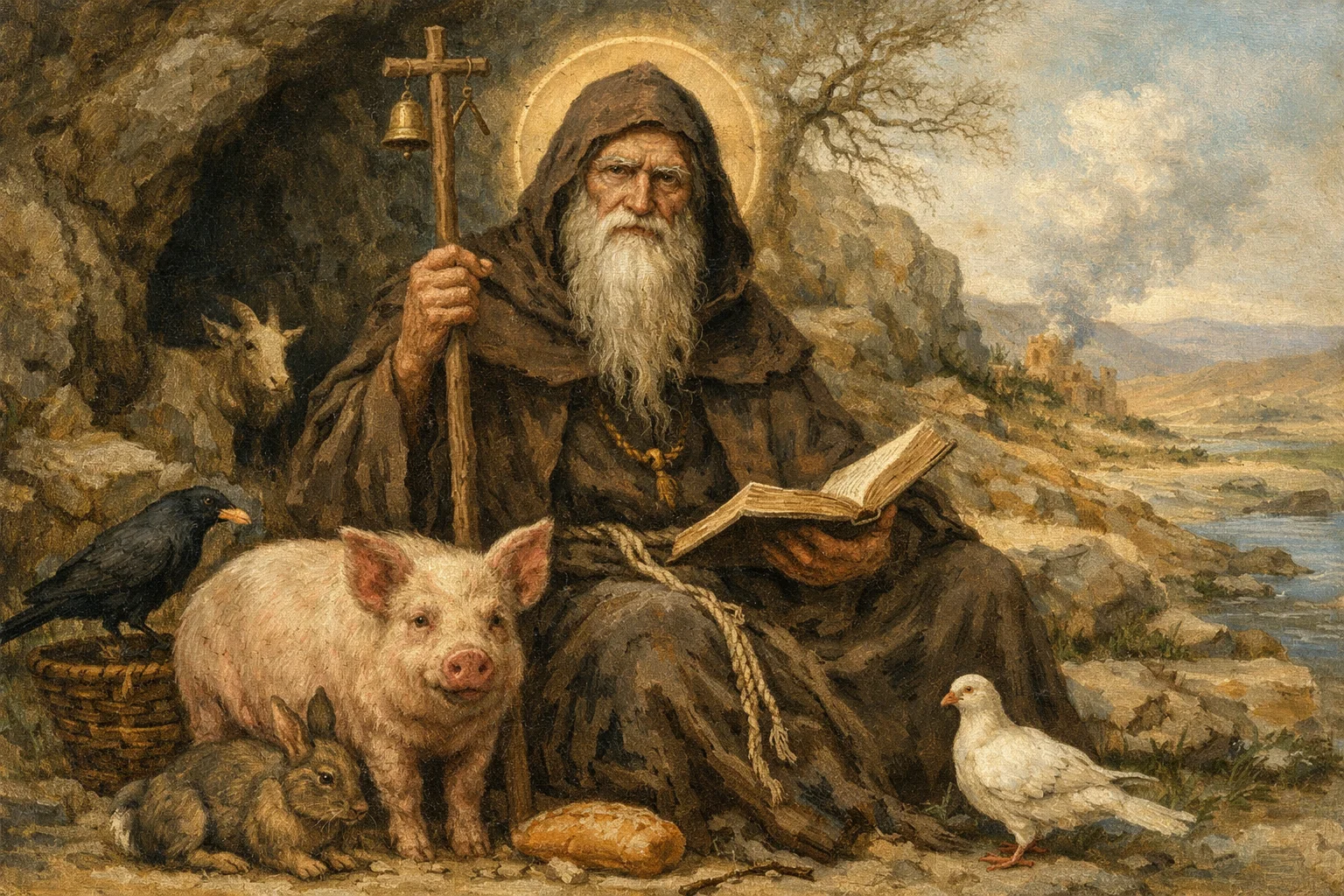
According to various accounts, during his life in the desert, Saint Anthony lived alongside wild animals that approached him without fear.
These stories reinforced the idea that he protected and cared for animals, contributing to his reputation as their patron saint.
The symbolism of the pig
This symbol is associated with the ancient religious order of the Antonines, who cared for the sick during the Middle Ages and often raised pigs to provide food and resources.
Este símbolo está relacionado con una antigua orden religiosa conocida como los antonianos, quienes en la Edad Media cuidaban a personas enfermas y solían criar cerdos para obtener alimentos y recursos.
🙏 The spread of His devotion throughout the world
Much of Saint Anthony the Great’s fame is due to the accounts written about his life, especially the biography composed by Athanasius of Alexandria, one of the most important Christian leaders of the 4th century.
This text helped spread his story throughout various Christian communities in the Roman Empire.
The Spread of His Cult in Europe
During the Middle Ages, devotion to Saint Anthony the Abbot spread widely throughout Europe.
Churches, monasteries and hospitals were named after him, particularly in areas where the Antonian Brothers, a religious order dedicated to caring for the sick, worked.
🎆 The Feast of Saint Anthony the Abbot in Cusco
The Festival of Saint Anthony the Abbot is celebrated on 17 January each year, and is one of the religious traditions that continues to be observed in many parts of the world.
On this day, Catholic communities honour the life and spiritual legacy of the saint with religious ceremonies and popular festivities.
In the Cusco region, the festival is also included in the calendar of religious celebrations that blend faith, tradition and local customs.
Although the origins of this celebration date back to Christian devotion that emerged centuries ago, in the context of Cusco it has taken on a unique cultural character.
😯 Interesting Facts About Saint Anthony the Abbot in Cusco
- Durante el Corpus Christi es llamado «Qollana» al ser santo con el que se comienza el recorrido.
- También lo llaman como el «patrón de los solteros».
There is a school and a university named after him. Both have existed since colonial times, reflecting the strong Catholic presence in Cusco:
- Durante el Corpus Christi es llamado «Qollana» al ser santo con el que se comienza el recorrido.
- También lo llaman como el «patrón de los solteros».
- Saint Anthony the Abbot Archdiocesan School (CASAAC), which is 427 years old as of the publication of this post.
- Saint Anthony the Abbot National University of Cusco (UNSAAC), which is 334 years old as of the publication of this post.