In Cusco's history, there was a moment when the earth opened up, walls collapsed and fear took hold of the city. From this dark and violent moment, one of the most intense and enduring devotions in the Andes was born. The devotion to the Lord of the Earthquakes, the Taytacha who still protects the city today.
This was not an imposed image or a faith learned by heart. Rather, it was a devotion born of trembling, collective fear and the need to believe that someone could contain the chaos.
📜 Who is the Lord of the Earthquakes?
The Lord of the Earthquakes, an image of Christ crucified, is venerated as the Patron Saint of Cusco. To the faithful, he represents the suffering of Christ and his constant presence in times of danger, illness and disaster.
His popular Quechua name is "Taytacha", meaning "little father" or "daddy". This intimate and affectionate term reveals the emotional closeness between the image and the people who venerate it.
Beyond the annual procession, his history comprises a succession of miracles, artistic mysteries and cultural resistance spanning more than three centuries.
The enigma of origin: Royal gift or indigenous handiwork?
According to popular tradition, the Taytacha sculpture was a gift from Emperor Philip II in the 16th century. It was specifically made to resemble the local people in order to facilitate evangelisation.
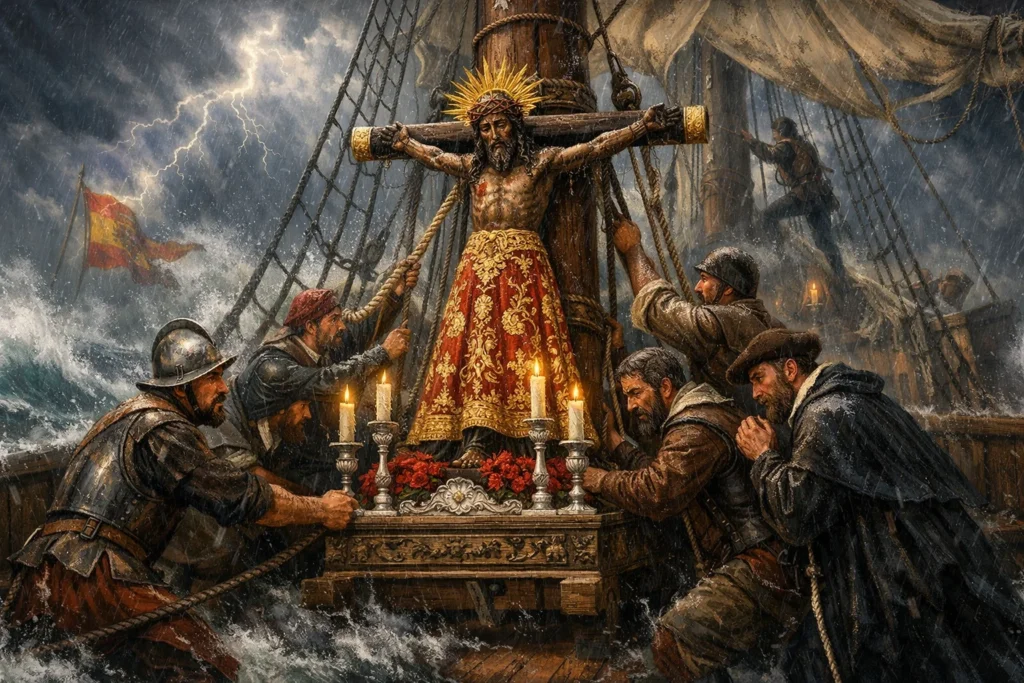
During its sea voyage to Peru, however, the ship carrying it was threatened by a storm that almost sank it. The crew took the sculpture out to the mast, at which point the storm immediately ceased, earning it its first title: Lord of the Storms.
En route to Cusco, the sculpture passed through Mollepata in the province of Anta. It is said that it remained there because it became so heavy that it could not be moved. Locals said this was because the image wanted to stay there.
Unable to do anything else, the group decided to leave it there, but only on the condition that a temple would be built to venerate it. This image is now known as Lord Manuel of Exaltation of Mollepata.
However, they say that this act was a ruse by the mule driver, who was in charge of carrying the image, to keep it for himself because it was such a fine sculpture. To prevent the bishopric of Cusco from finding out what had happened, he secretly commissioned a similar image from a local sculptor. He then delivered it to the Cathedral of Cusco.
1650: The Christening of the Land
Until the mid-17th century, the image was known as the 'Christ of the Good Death' and was largely forgotten, remaining on an altar. Its fate changed on 31 March 1650. At 2 pm, an earthquake devastated the city.
Amidst the incessant aftershocks, the people carried the image to the door of the cathedral. According to the chronicle, the movement stopped instantly. It was in that moment of terror and relief that the people spontaneously "rebaptised" him as the Lord of the Earthquakes.
1720: El desplazamiento de Santiago
Quizás el hito más importante para la identidad cusqueña ocurrió en 1720. Una peste asolaba la ciudad y solo se detuvo tras la procesión del Cristo moreno.
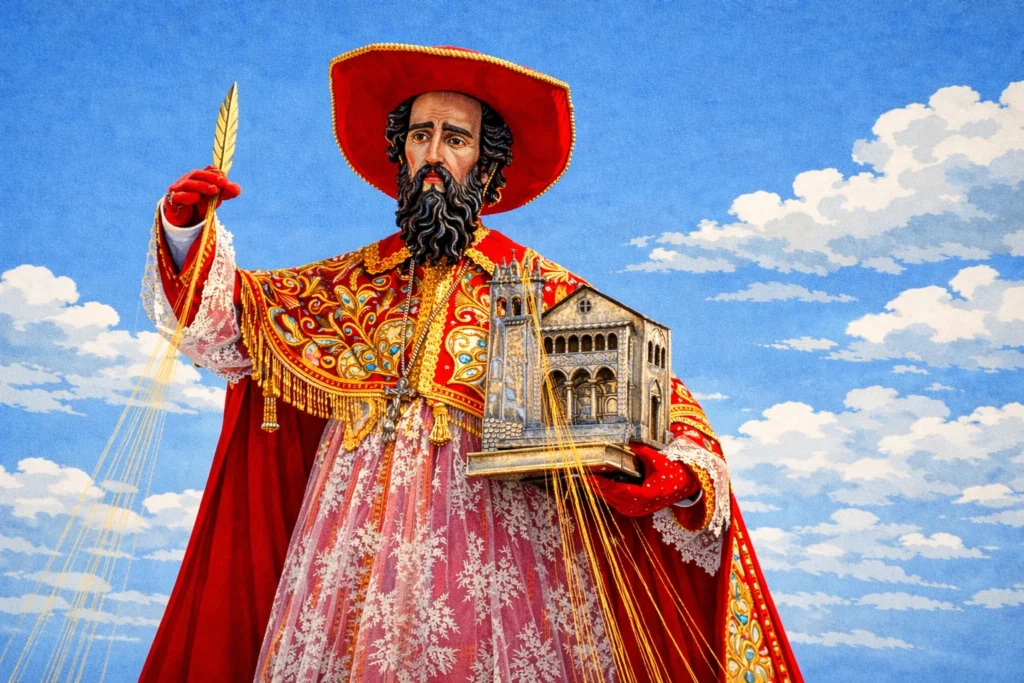
Este milagro tuvo una consecuencia política y religiosa: el Señor de los Temblores fue proclamado oficialmente Patrón Jurado del Cusco, desplazando al Patrón Santiago, quien había sido impuesto por los españoles en 1646.
Fue un triunfo simbólico del «Cristo Indio» sobre el santo guerrero de la conquista.
1741: The establishment of Holy Monday
The earthquake memorial procession was originally held on 31 March. However, in 1741, it was liturgically moved to Holy Monday, which marks the start of Holy Week in Cusco as we know it today.
🙏 A Christ with an Andean face
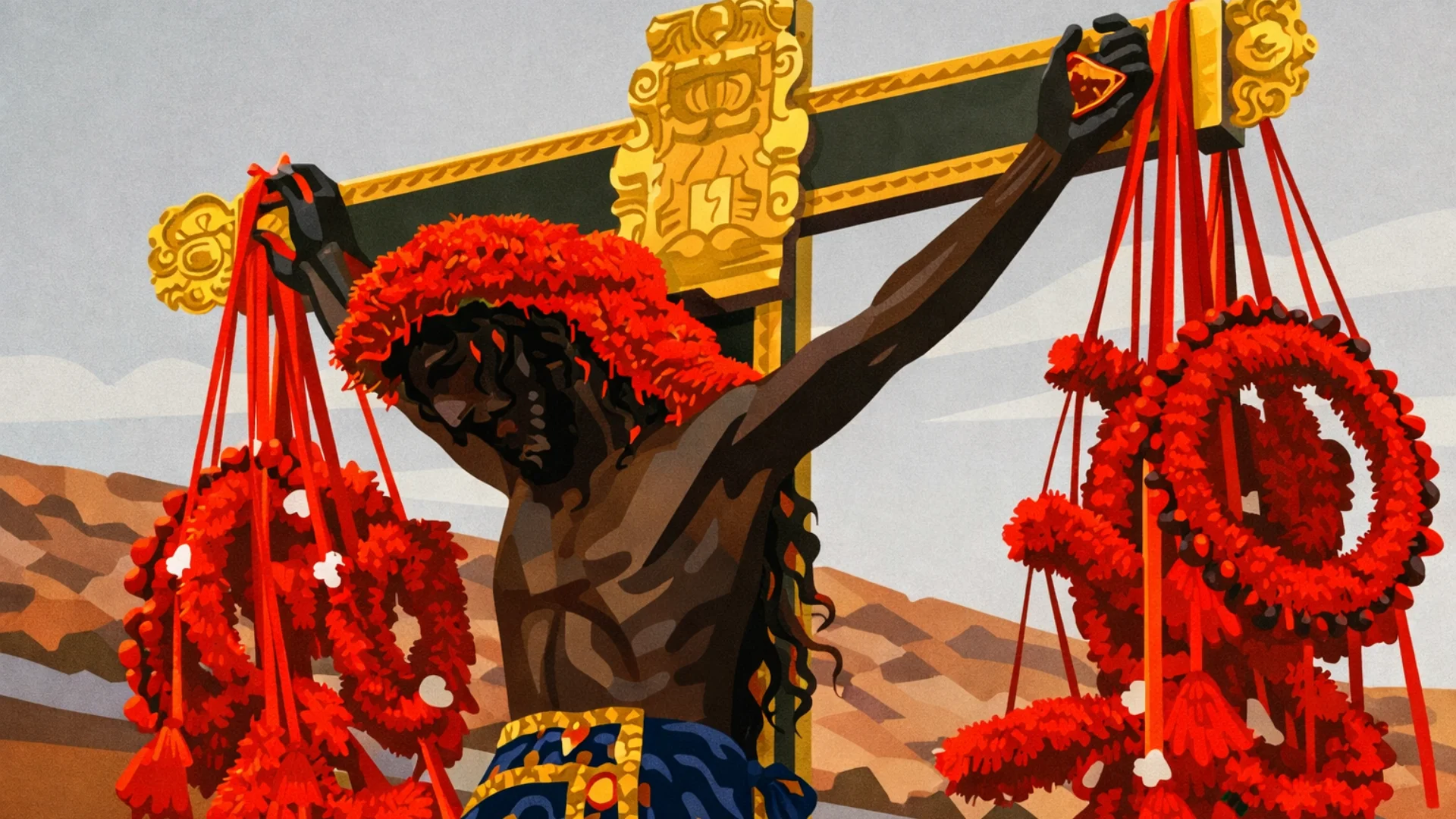
The most distinctive feature of Christ is his dark skin, which fosters strong identification with the Andean population. However, this colour was not intentional; originally, it was coppery to resemble the indigenous people, but not black.
The darkened complexion is the result of centuries of exposure to smoke from candles, tapers, and, poetically, the resin of the ñucchu flower thrown at it by the faithful.
Anatomically, the image has unique characteristics that suggest local intervention or profound syncretism.
- Materials: Maguey, a native plant, has been found in its internal structure, specifically in the frame of the shoulders and neck. This suggests that it may have been made or altered by indigenous people in Cusco.
- Texture: The head, hands and feet are carved from light wood and covered in glued fabric, a technique that lends them a lifelike appearance.
🛡️ A Modern Protector
Devotion is not a thing of the past. During modern disasters, the image has been carried in procession, reaffirming its protective role.
- 1950 earthquake: Taytacha took to the streets after the earthquake that destroyed much of the colonial architecture.
- 1986 earthquake: Once again, he presided over prayers for the wounded city.
- Armed conflicts: It is said that he protected Marshal Gamarra in 1835 and the city from the threat of a Chilean invasion in the 1880s.
🎆 The Holy Monday Procession: Ritual and Syncretism
If there is one day that defines the identity of Cusco, it is Holy Monday. Unlike other Holy Week celebrations around the world, the liturgy here is intertwined with ancestral customs.
From early morning, the Chayñas (liturgical singers whose name evokes the Andean goldfinch) fill the cathedral with a mystical atmosphere by singing mournful songs in Quechua.
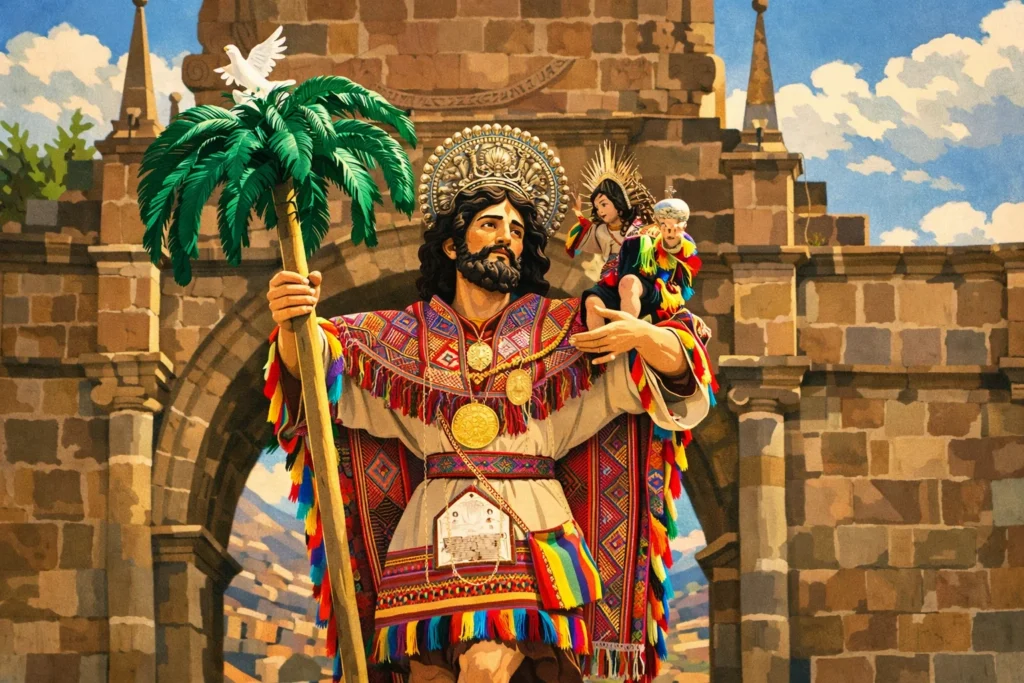
As the Taytacha leaves in procession, he walks through the streets on carpets of flowers. However, the most significant tribute comes from the balconies in the form of a rain of ñucchu flowers. This red flower was sacred to the Incas and associated with their deities, but Christianity reinterpreted it as the blood of Christ. It is the perfect example of cultural fusion — an ancestral offering to a Western god.
🏛️ Cultural Heritage and Legacy
This festival is so important that, in December 2007, the Peruvian government declared it a National Cultural Heritage Site. The cult of the Lord of the Earthquakes was recognised as a symbol of national identity, where Catholic solemnity and the Andean worldview coexist.
Today, when Taytacha blesses his people from the cathedral's atrium, he blesses not only Catholics, but also the memory of a people who knew how to resist and transform their faith. They found a reflection of their own history in his dark face.