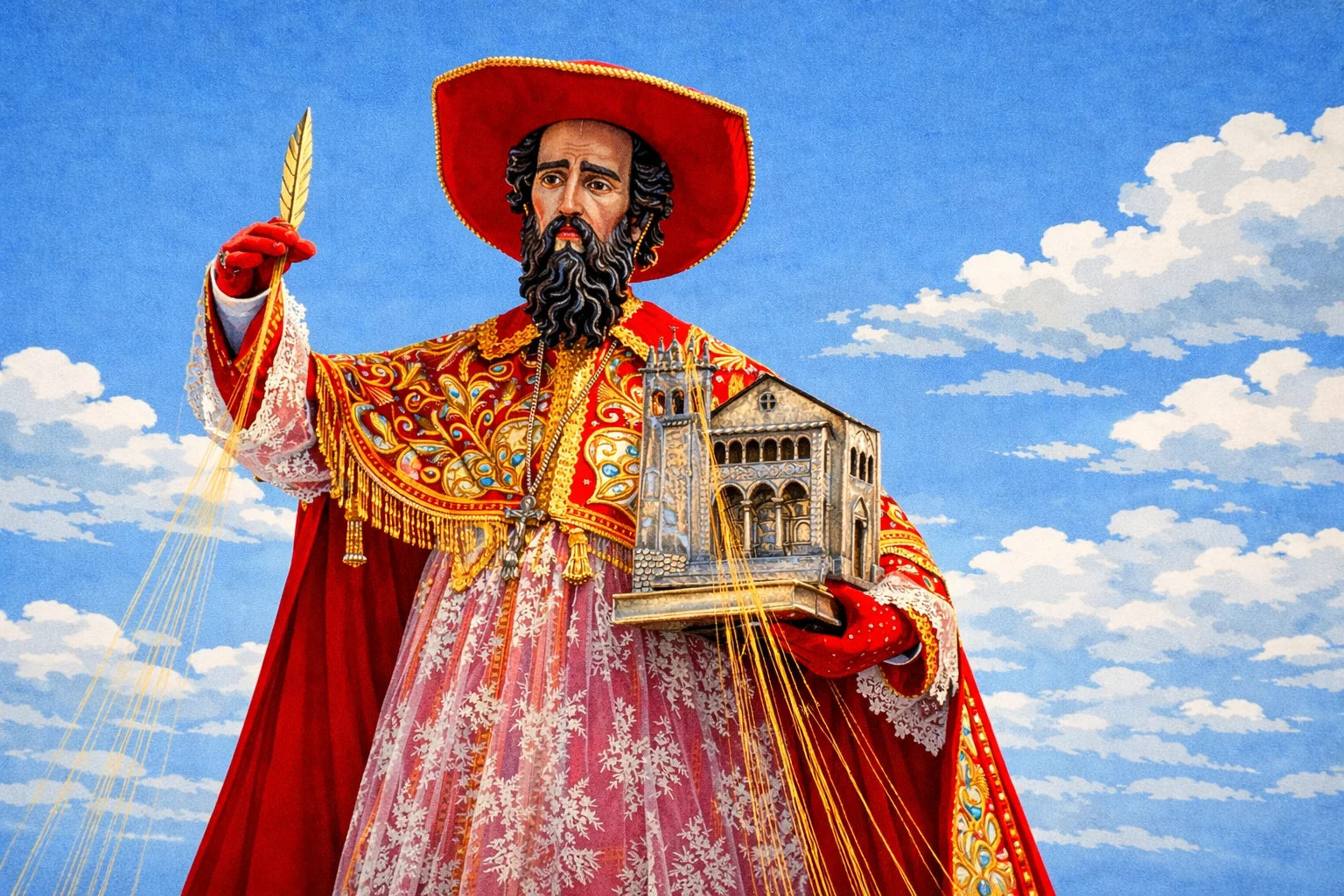
Saint Jerome is one of the most important figures in Christianity. He is renowned for his profound knowledge of the Scriptures, as well as for producing one of the most influential Bible translations: the Vulgate.
He led a life of study and discipline, embarking on an intense spiritual quest that led him from the Roman world to a life of seclusion in the desert.
Over time, his legacy earned him the title of Doctor of the Church, and he came to be widely venerated around the world. His feast day, September 30, is commemorated every year with religious celebrations and traditions that keep his memory alive.
📜 Who was Saint Jerome?
Saint Jerome was born between 331 and 347 AD in Stridon, a region of the Roman Empire situated between present-day Croatia and Slovenia. Coming from a wealthy family, he was able to receive a high-quality education from a young age.
He was sent to Rome to study grammar, rhetoric and philosophy, training as an intellectual within the classical tradition. At this time, Christianity was expanding rapidly while still coexisting with the Empire's traditions.
Saint Jerome was renowned not only for his intelligence, but also for his intense and forthright character. Throughout his life, he participated in theological debates and wrote texts in which he firmly defended his ideas.
However, this period was also marked by a greater focus on intellectual pursuits than spiritual ones, and over time, this situation began to cause him internal conflict regarding the meaning of his life.
His retreat to the desert
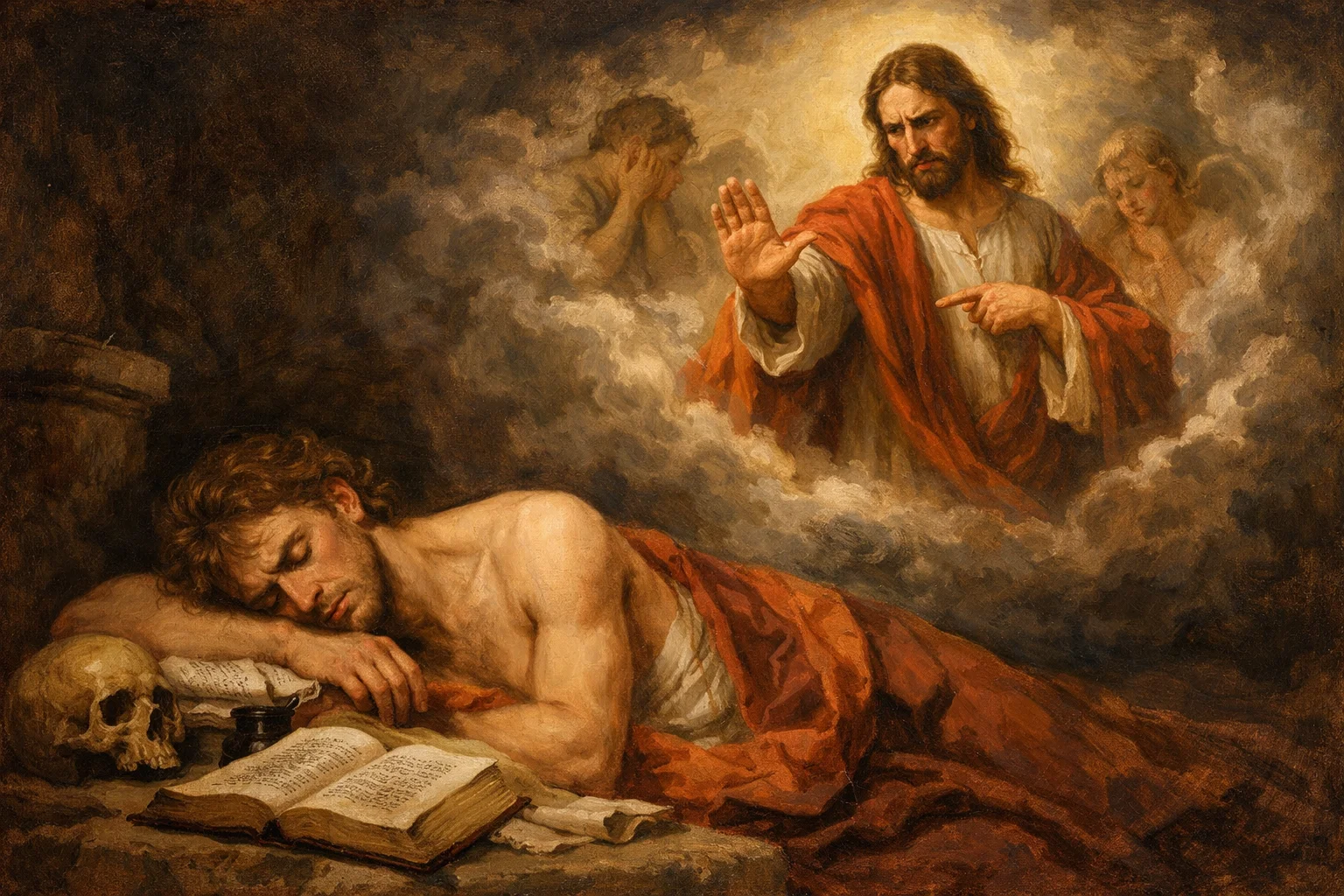
In a letter to Saint Eustochia, Jerome revealed that Jesus Christ had appeared to him in a dream and told him that he was not a Catholic Christian, but a pagan.
This was because, although he found time to read the works of thinkers, poets and novelists of the time, he did not make time to read the Holy Scriptures. This marked a turning point in his life.
The revelation prompted him to delve deeper into the Christian faith and adopt a more austere lifestyle centred on studying the Scriptures.
To deepen his spiritual connection, Saint Jerome decided to retreat to the Syrian desert. There, he lived as an ascetic, devoting long hours to prayer, fasting and study.
In that solitary setting, he began to study biblical texts more deeply, even learning Hebrew to better understand them in their original language.
His biggest project: the Vulgate
In the 4th century, Pope Damasus I commissioned Jerome to review and standardise the various Latin translations of biblical texts in circulation. At that time, many of these translations were inaccurate or differed from one another, causing confusion.
To complete this task, Jerome did not limit himself to translating from existing versions. Instead, Saint Jerome studied the texts directly in Hebrew and Greek, allowing him to produce a more accurate translation.
This effort involved years of work, analysis, and dedication, and it became one of the most important projects of his life.
The result was the Vulgate, a Latin version of the Bible that became the Church's official text for many centuries. Thanks to this translation, the Scriptures could be understood by more people in the Western world.
The Vulgate is still considered one of the most influential translations in the history of Christianity today, and it is one of the main reasons why Saint Jerome is remembered as a key figure in the Christian tradition.
He is recognized as a Doctor of the Church, a title granted to saints who have made significant contributions to Christian doctrine.
St. Jerome spent his final years in Bethlehem, where he devoted himself to studying, praying, and living in community with other Christians. He continued his intellectual work there, writing and revising texts until the end of his life.
Saint Jerome died in Bethlehem around 420 AD.
Over time, he was widely recognized by the Church, and his legacy grew through his writings and influence on biblical interpretation.
🦁 Depicted alongside lions
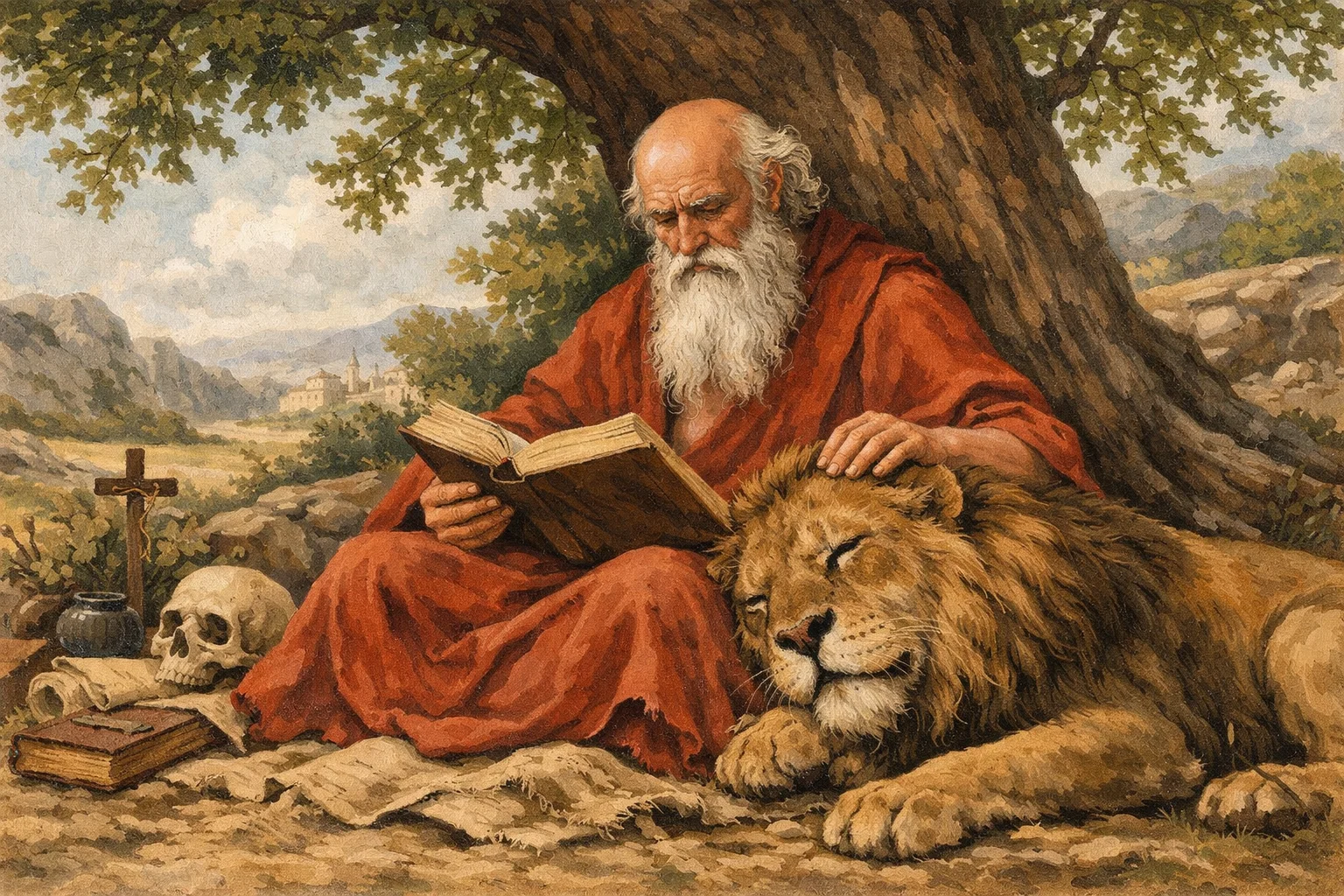
One of the most famous depictions of Saint Jerome shows him accompanied by a lion. This image is common in Christian art.
According to tradition, while Saint Jerome was living in a monastery, a lion appeared limping near it. The other monks fled in fear, but Jerome approached the animal.
Upon examining the lion, Jerome discovered that it had a thorn lodged in its paw. He calmly removed the thorn and tended to the wound. From that moment on, the grateful lion stayed by his side and became tame.
🙏 The spread of His devotion throughout the world
Over the centuries, St. Jerome has established himself as one of the most important figures in Christianity. His intellectual legacy, particularly his work on the Bible, enabled his devotion to spread around the world.
His influence was particularly strong in Europe, where monasteries and centers of learning adopted his teachings as guides for studying and interpreting the Scriptures.
Saint Jerome was eventually recognized as a saint, and his designation as a Doctor of the Church further solidified his significance within the Christian tradition.
🎆 The Feast of Saint Jerome in Cusco
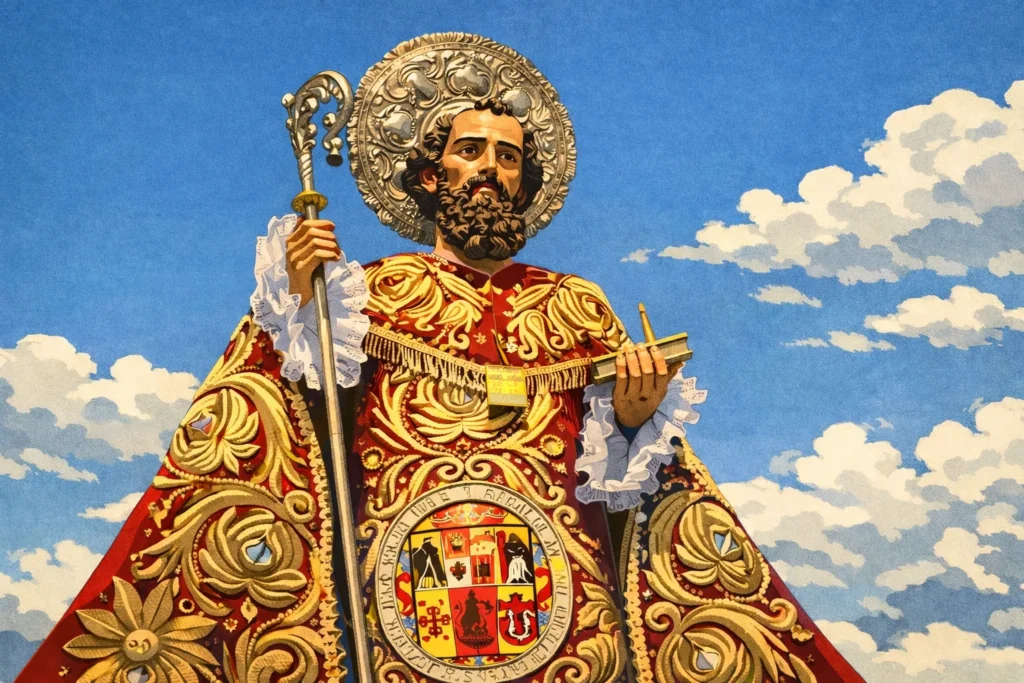
In the Cusco region, devotion to Saint Jerome is closely linked to the traditional district of San Jerónimo, located just a few minutes from the city, every September 30. The district not only bears his name, but also preserves a strong cultural and religious identity tied to the saint.
The Feast of Saint Jerome in Cusco is an expression of faith that incorporates unique regional cultural elements. The festivities usually include Masses, processions, and community activities, all of which require the participation of the local population.