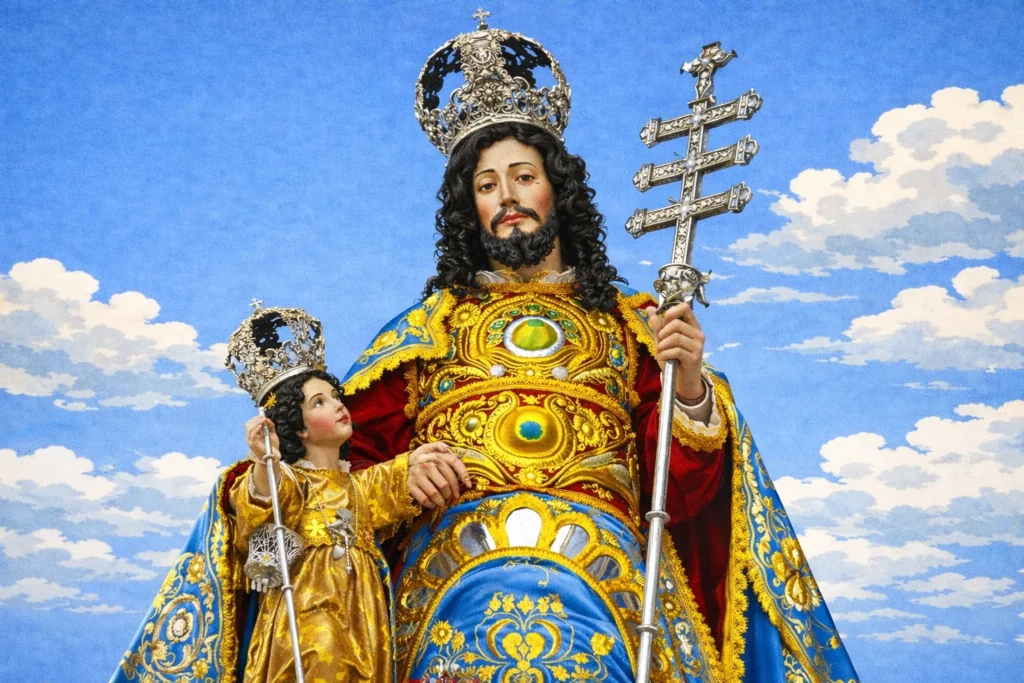
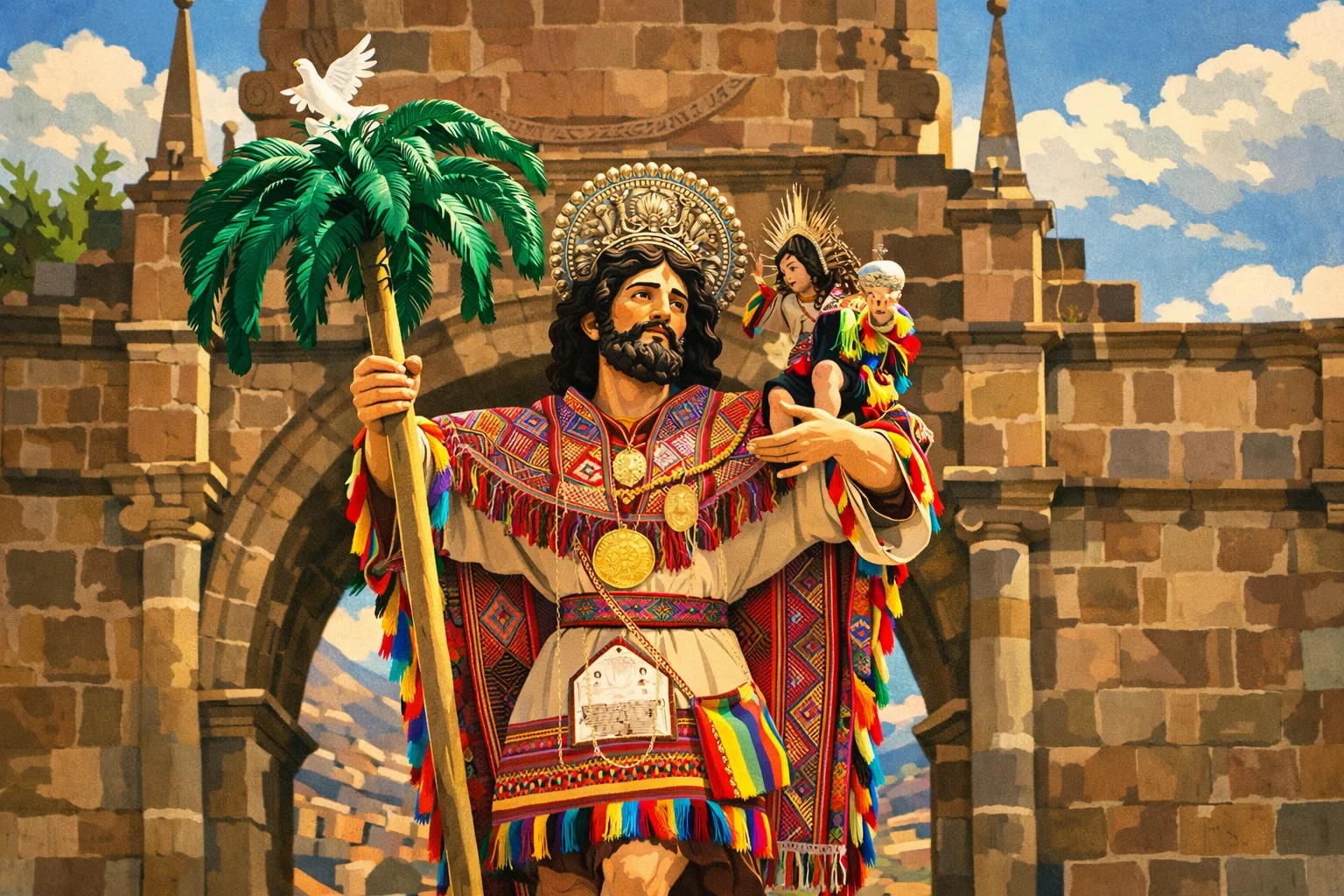
Saint Christopher is one of the most well-known saints in the Christian tradition. He is venerated as the patron saint of travelers in many parts of the world.
His story blends historical and legendary elements and tells of a strong man who dedicated his life to helping others. He eventually became the central figure in one of Christianity’s most symbolic tales when he carried Christ himself on his shoulders.
Over time, he became a symbol of protection for travelers. For this reason, devotion to him spread widely, giving rise to various religious celebrations.
📜 Who was Saint Christopher?
The story of Saint Christopher has been passed down primarily through oral tradition and ancient texts that blend historical facts with symbolic elements. This has led to his being interpreted as both a historical and legendary figure.
His real name was Reprobus. He was an extremely burly man of great stature and obvious incredible strength.
His quest to serve the most powerful
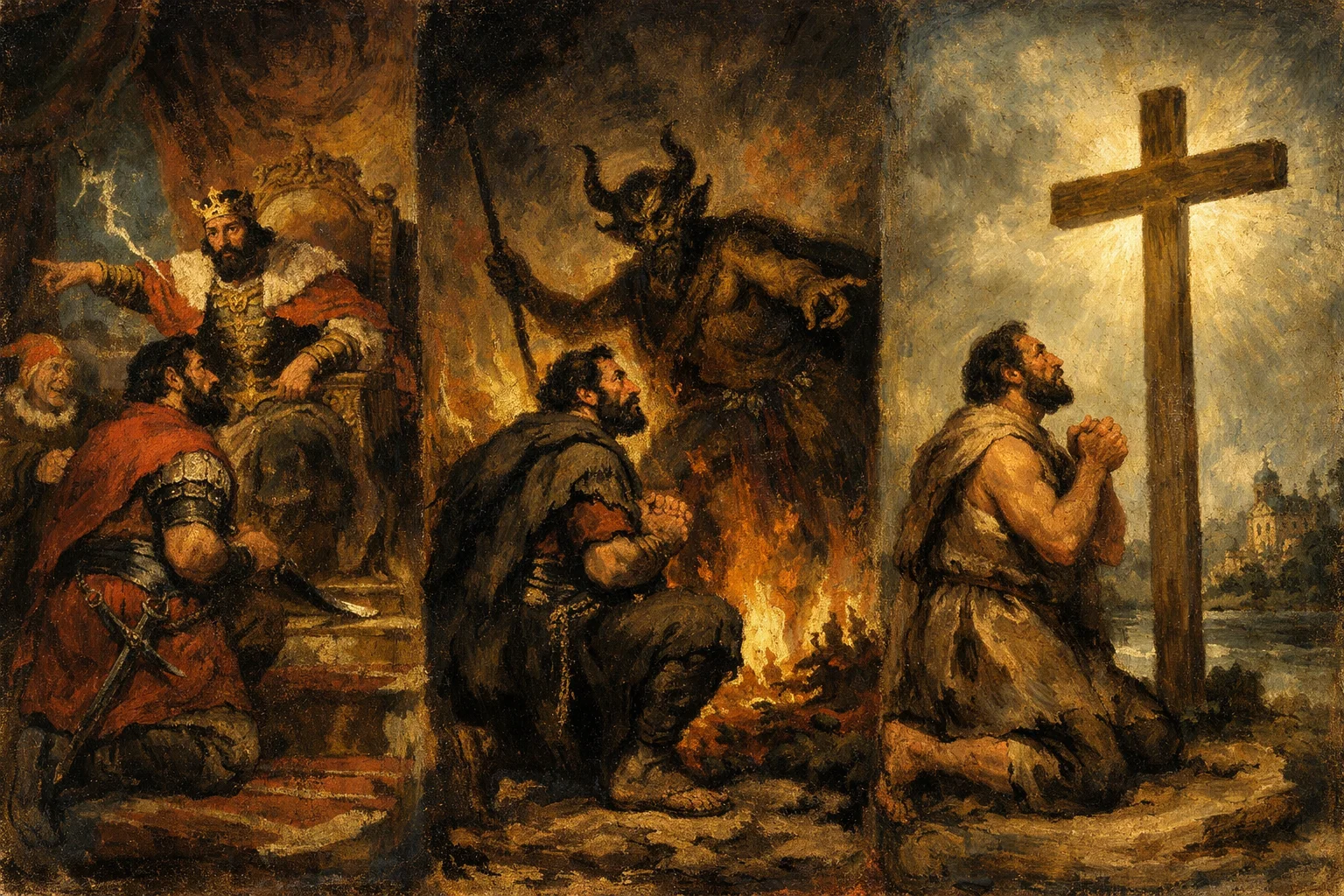
Before becoming a saint, he sought to serve the most powerful being. In his quest, he first placed himself in the service of a king who believed himself to be invincible. However, one day he discovered that the king feared the Devil so much that he crossed himself every time the Devil was mentioned.
He then decided to stop serving the king and instead serve the Devil, believing the Devil to be the most powerful being in existence.
However, he noticed that the Devil feared something: the cross. The Devil had to find other routes whenever he saw one in his path.
Reprobus then decided to leave the king and seek out the man who had died on the cross: Jesus Christ.
Helping out on the River
After deciding to serve Christ, he sought a way to use his great strength to help others.
A hermit advised him to help people cross a dangerous river since there was no bridge, and many travelers risked their lives trying to cross it. Reprobus accepted this mission, settling near the river to begin his service to Christ.
The Encounter with the Child
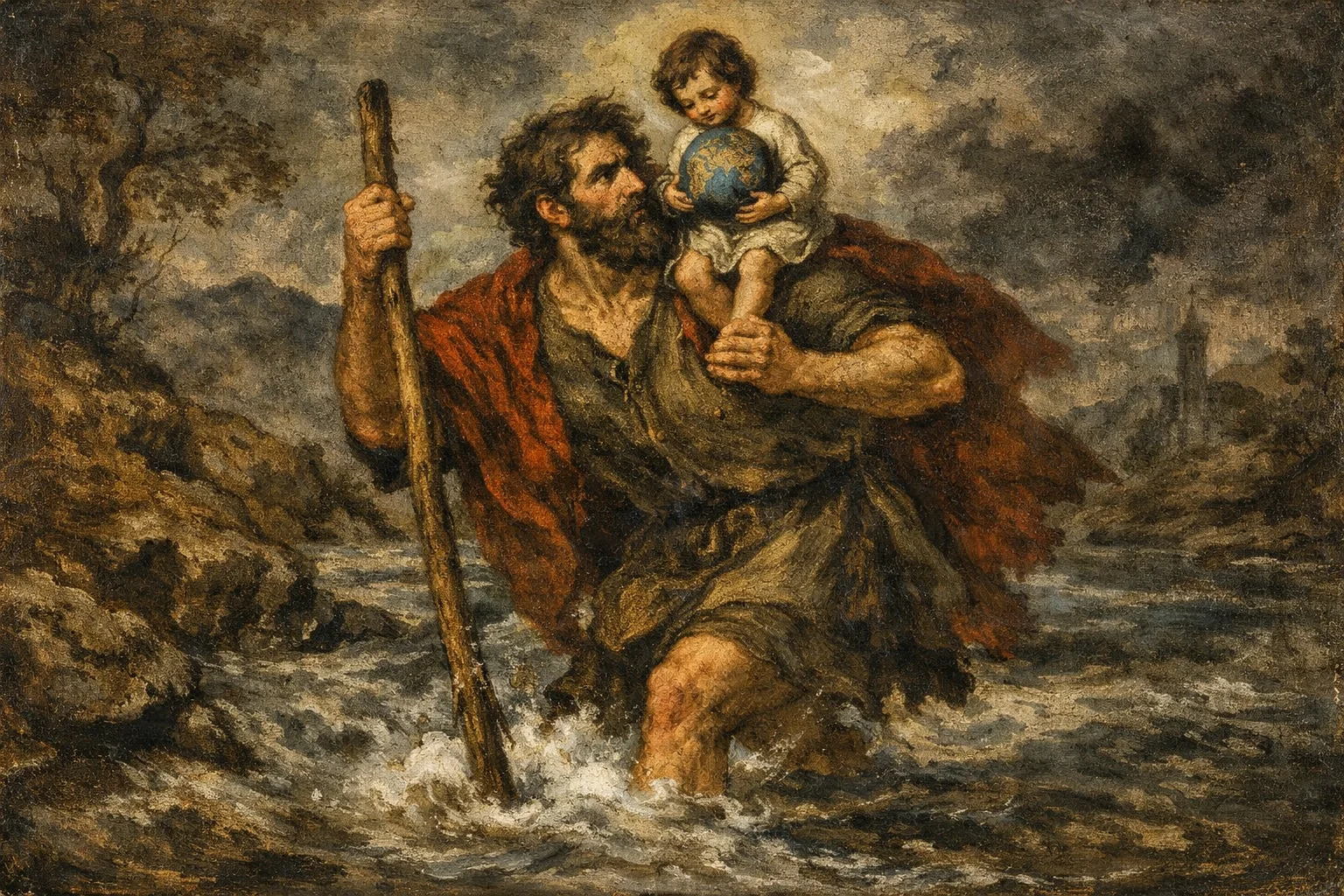
One night, a boy approached the riverbank and asked for help crossing it. The man hoisted the boy onto his shoulders, as he had done with other travelers, and began to cross the river.
However, as he waded into the water, he felt the boy’s weight increase dramatically, as if he were carrying an unusually heavy load. Despite the difficulty, he managed to reach the other side.
Once there, the boy revealed his identity—he was Christ—and explained that the weight he felt with every step was that of the entire world.
❓ The meaning of his name
The name Christophoros, from which Cristopher is derived, literally means "bearer of Christ".
This refers not only to the story of the river but also to the idea of carrying Christ in our daily lives through our actions and service to others.
🙏 The spread of His devotion throughout the world
During the Middle Ages, devotion to Saint Christopher spread throughout Europe. Many churches were named after him, and his image could be found in prominent places, especially at city gates or along roads, as a symbol of protection for travelers.
When Christianity arrived in the Americas, this devotion spread to the continent as well. In various countries, including Peru, Saint Christopher became part of religious and cultural traditions, maintaining his role as the protector of travelers.
🎆 The Festival of Saint Christopher in Cusco
Saint Christopher's feast day is celebrated every July 25. On this day, thousands of the faithful commemorate his life and his role as the patron saint of travelers. Over the years, the celebration has incorporated religious elements and folk traditions that vary by region.
In Cusco, devotion to Saint Christopher is closely linked to the traditional neighborhood of San Cristóbal, one of the city’s most iconic areas, located in the upper part of the historic center.
During the festival, the neighborhood becomes a gathering place where faith and tradition converge. The festivities usually include masses, processions, and community activities in which neighbors and devotees participate.