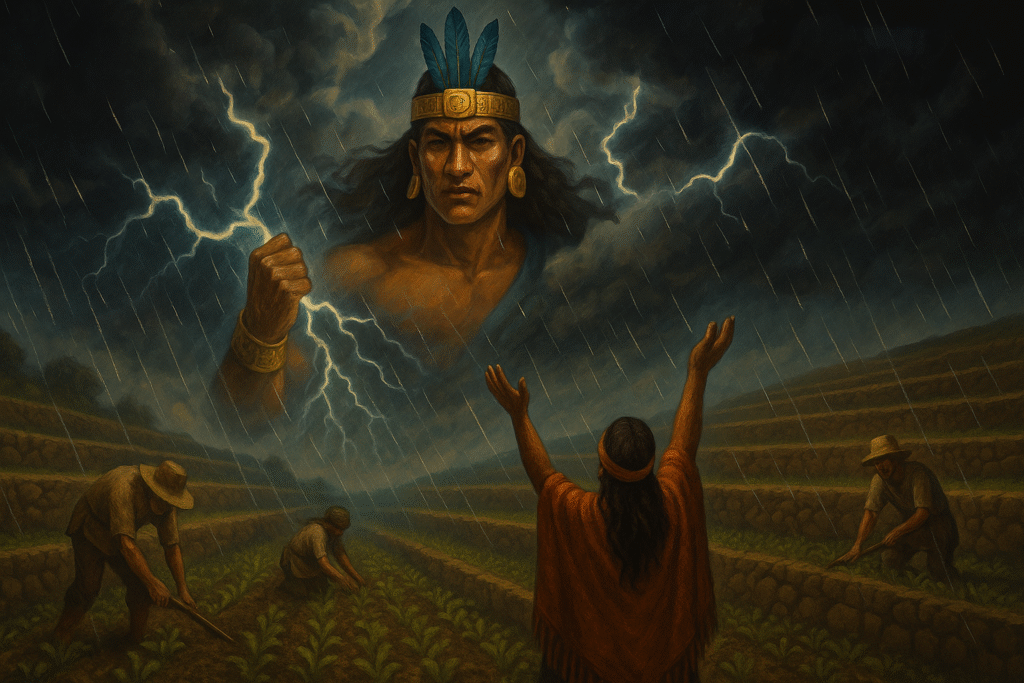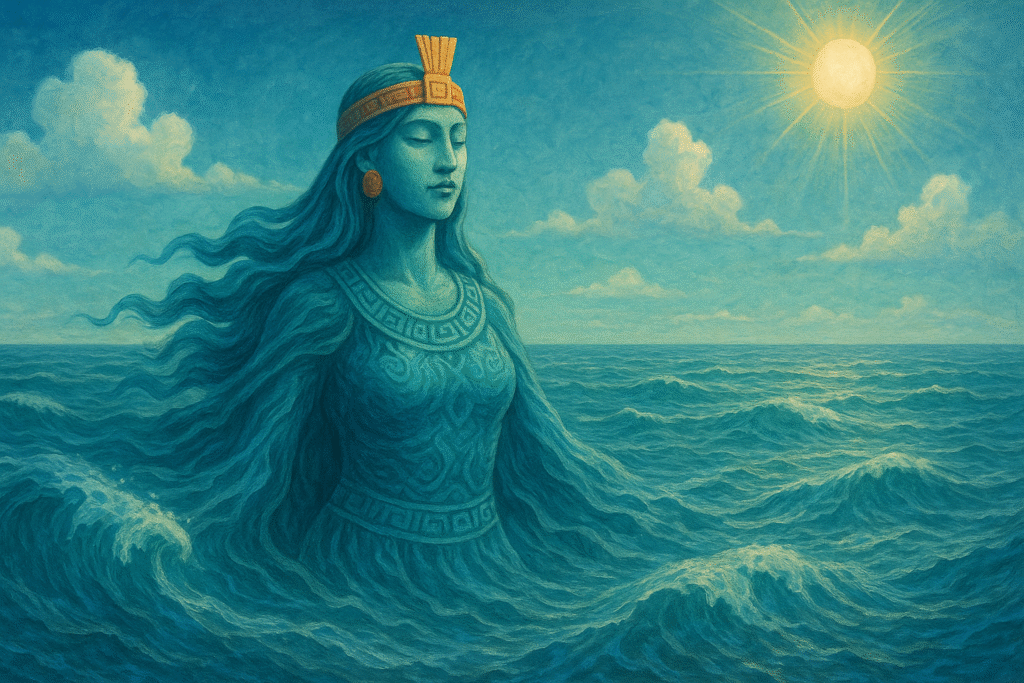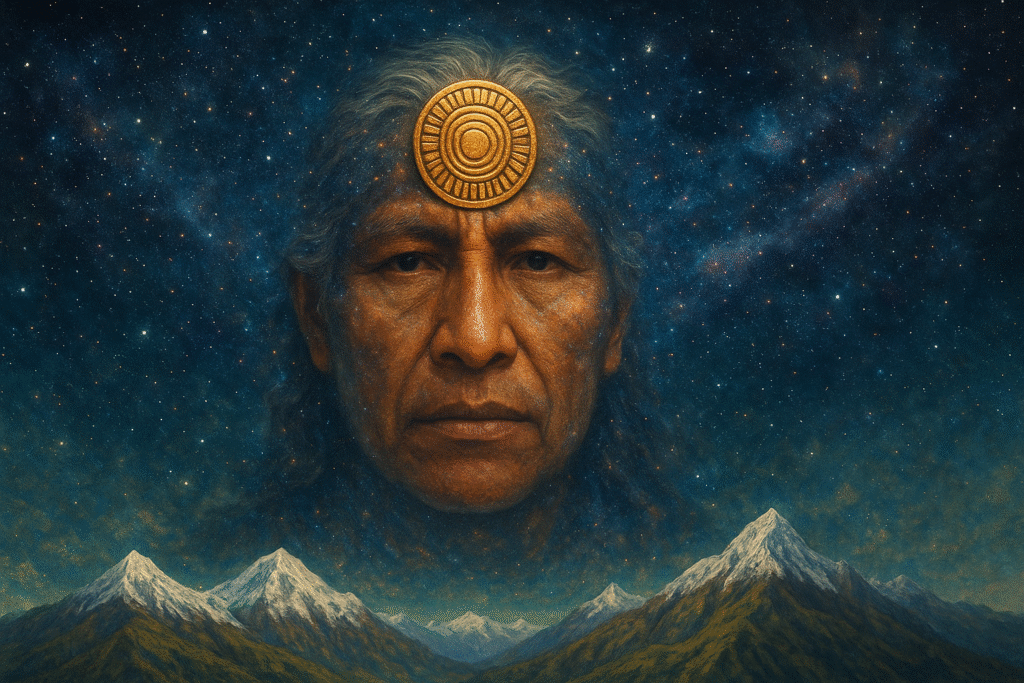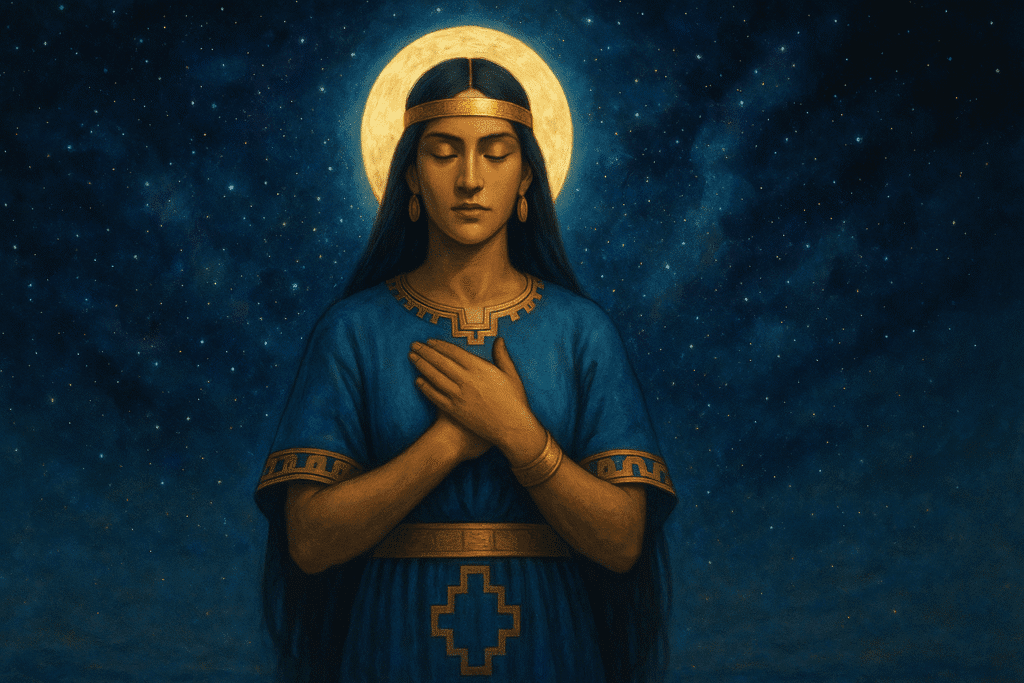
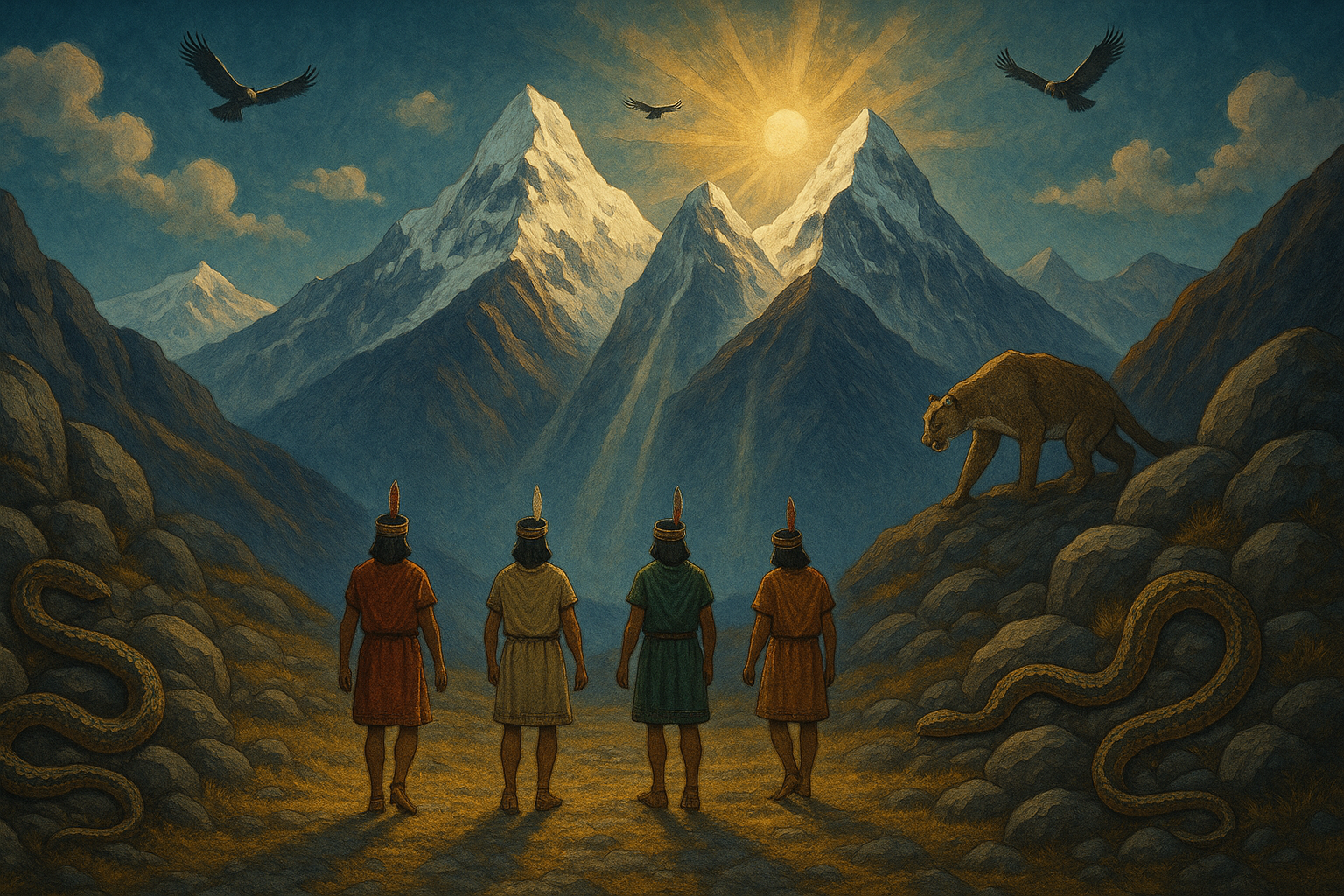
In the depths of Andean memory, at a time when humans roamed without laws or purpose, the gods of Hanan Pacha decided to send emissaries to bring order to the world. From the sacred depths of Pacaritambo, through three mysterious caves carved into the rock, emerged four brothers and four sisters who were destined to alter the course of history. These were the Ayar Brothers.
Bearers of strength and wisdom. Their mission was to find the promised land where they would build the navel of the world, the future city of Cusco. However, their journey was not without challenges; it was also marked by jealousy, sacred transformations and sacrifices that would turn them into legends.
🌄 The birth in Pacaritambo
Wiracocha ordeno a su hijo el Dios Inti enviar a las personas más sabias que conocía para poder así poner orden en el mundo y guiar a los humanos quienes vivían como animales, de forma cavernícola como quien diría. Inti conocía a todos los hombres y mujeres del Mundo y sabía exactamente a quienes enviar.
Inti solicitó a la Pachamama prestarle su vientre para poder dar a luz a sus hijos en el Kay Pacha. Siendo Pacaritambo el lugar destinado a ello, allí había tres ventanas de tres cuevas en una gran roca:
- Maras Tocco
- Sutic Tocco
- Y la mayor de donde surgieron, Capac Tocco.
Y fue así que envió a sus cuatro hijos acompañados de sus esposas a enseñar a los humanos a vivir como gente.
- Ayar Cachi with Mama Kora
- Ayar Uchu with Mama Huaco
- Ayar Auca with Mama Raua
- Ayar Manco with Mama Ocllo
📜 Meaning of names
En la leyenda, cada hermano y cada hermana recibe un nombre que refleja su carácter, sus dones o su papel en la misión sagrada. En quechua, Ayar puede interpretarse como “tronco” o “raíz”, pero también alude a la quinua silvestre, símbolo de fuerza y origen. Y Mama significa Madre.
Of the Ayar Brothers
Ayar Cachi
- Cachi = Salt
- The salt refers both to his white complexion and to his destructive power as the strongest of the brothers.
- His weapon of choice was the huaraca, a type of sling.
Ayar Uchu
- Uchu = chili
- It refers to his fiery, energetic character. He is the most impulsive of his siblings.
Ayar Auca
- Auca = Warrior, enemy, savage, barbarian
- It refers to his fiery, energetic character. He is the most impulsive of his siblings.
Ayar Manco
- Manco o Manqu = Brave, also related to power
- He was the strategist of the group and was responsible for carrying a gold bar with which they would found the Inca empire.
Of the Mamas
Mama Kora
- Kora = Herb
- A woman who is knowledgeable about herbs and plants and knows how to use them for healing purposes.
Mama Huaco
- Huaco Warrior or strong person
- According to stories, she could take the form of any being in the world. As well as being a determined woman and warrior, she taught people how to throw a rock and stun someone or something with a huaraca.
Mama Raua
- Raua = Hot or fiery
- She taught ceremonial and medical practices, as well as how to cultivate and irrigate the land.
Mama Ocllo
- Ocllo/Uqllu= Lady or woman
- According to stories, she taught women how to weave and spin.
🎒 The Journey of the Ayar Brothers
After leaving Pacaritambo, the four Ayar brothers and their wives embarked on a sacred journey in search of the Promised Land, where they would establish the heart of their future empire. Their mission was to find a fertile valley and bring civilisation to the scattered peoples who lived without laws or organisation.
- Ayar Manco taught agriculture, construction and social organisation.
- Ayar Cachiwith his immense strength, protected the group and showcased the might of the sons of the Sun.
- Ayar Uchu and Ayar Auca guided them in the use of weapons and strategies.
- The Mamas taught women how to spin, weave, prepare food, and heal with herbs.
Many people accepted their teachings and joined the growing caravan. However, not all encounters were peaceful. Some settlers saw the Ayars as threatening strangers. In those cases, Ayar Cachi sprang into action; his huaraca (sling) could hurl stones with such force that the earth shook, a formidable power that deterred anyone from opposing him.
⛰️ The deception and imprisonment of Ayar Cachi
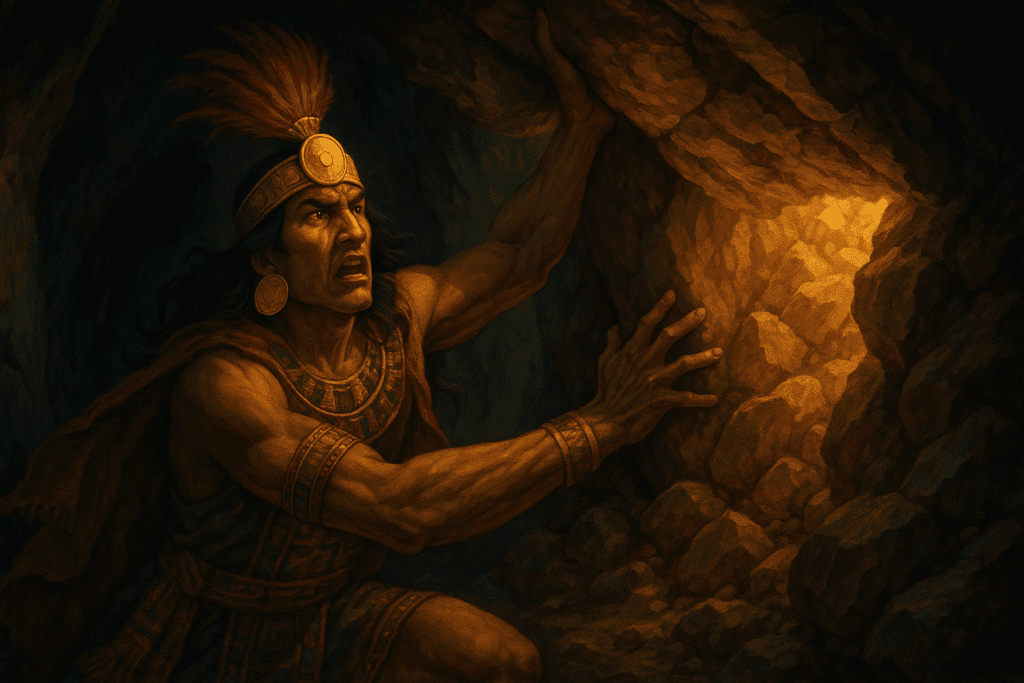
Ayar Cachi was the strongest of them all. With a single stone thrown from his huaraca, he could knock down mountains, open cracks in the earth and cause panic in entire villages. The same strength that made him feared by his enemies also inspired fear and envy in his own brothers. miedo y envidia en el corazón de sus propios hermanos.
The collapse was ordered by some of the other three brothers' followers to avoid arousing suspicion. In the darkness, Ayar Cachi realised he had been betrayed. In some versions of the story, he swore revenge, cursing his brothers until the end of time. In others, he accepted his fate, recognising that his power was too great and that his presence impeded balance.
🪨 The petrification of Ayar Uchu
Ayar Manco tested the golden bar that his father, Inti , had given him. When it sank easily into the ground, he knew that this was the place where they would found their empire. However, they still had not found the right spot. To find out where to go next, they decided to visit the elders, who were considered wise due to their long lives. They changed course and headed for Quirirmanta. There, they found an elder standing next to an apacheta, a sacred place where offerings are made to Pachamama and Apus in return for protection.
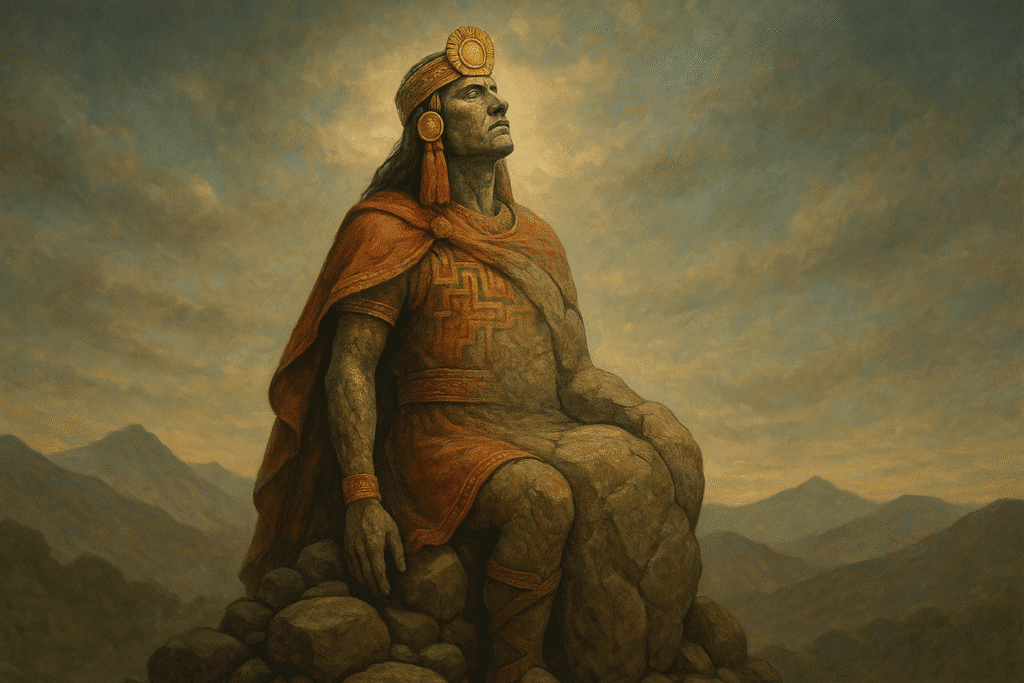
The elder stretched out his hand to Ayar Uchu, who jumped onto the apacheta and transformed from the feet up into a rock. Before he was completely transformed, he told them to follow the path, saying that on the next full moon, they would see a sign showing them where to go. Ayar Uchu decided to stay, asking them to leave a stone on each apacheta they found so that he would know where they were. In his honour, his brothers and wives held a celebration and baptised their petrified brother as Huanacauri, an archaeological site to this day.
The petrification of Ayar Uchu was not the gods' whim, but a gift they gave him. The Andean deities only turned those worthy of living forever into stone, thus acquiring great knowledge over time.
Another version of the story tells of how Ayar Manco ordered Ayar Uchu to remove a waca from the top of a hill. Instead of removing it, Ayar Uchu sat on it and found that he could not move; his feet were stuck to the ground and he had also turned to stone. The place was named Huanacauri in his honour. Huanacauri.
🌬️ The transformation of Ayar Auca
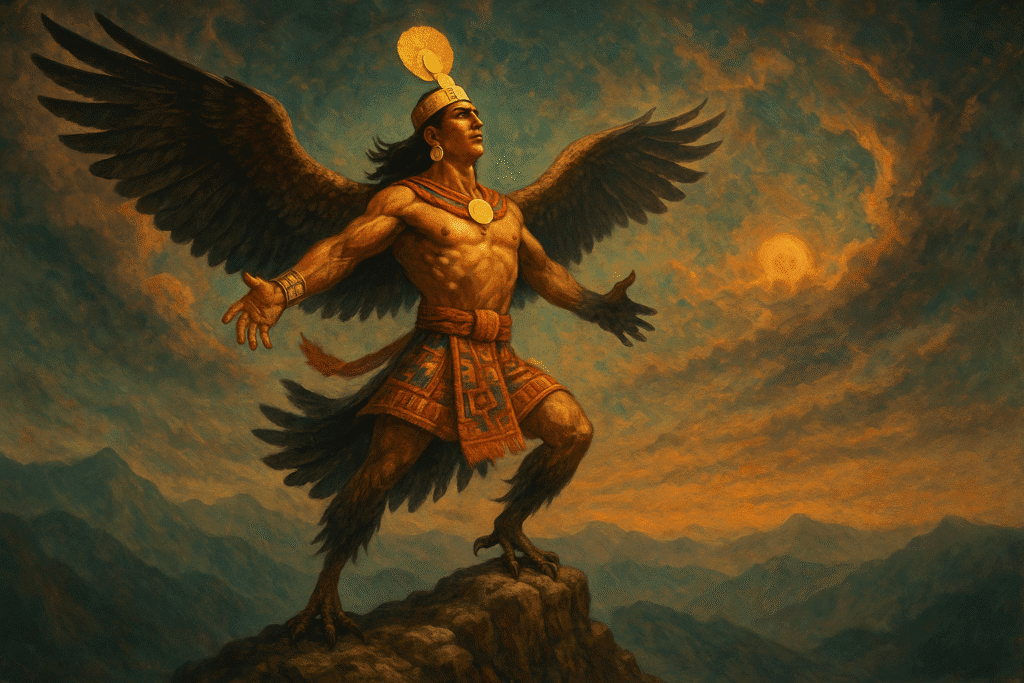
The group continued their journey along rugged trails, guided only by the sun. At one point, however, the mountains seemed to close in on them and the route became uncertain. Unable to decide which way to go, Ayar Auca climbed to a higher area to get a better view of the terrain. From above, he could see valleys and peaks, but none of them showed any sign of the place promised by Inti.
He asked his father Inti to help him rise into the sky so that he could see better. Strong winds began to blow, and soon Ayar Auca felt his body growing lighter and a tingling sensation running through his arms and back. Feathers sprouted where there had once been skin, and his hands transformed into the powerful wings of a condor. From the highest point in the sky, he could see the entire area. He guided them along a different route to more fertile lands, untouched by the plough.
☀️ The Qosqo Foundation
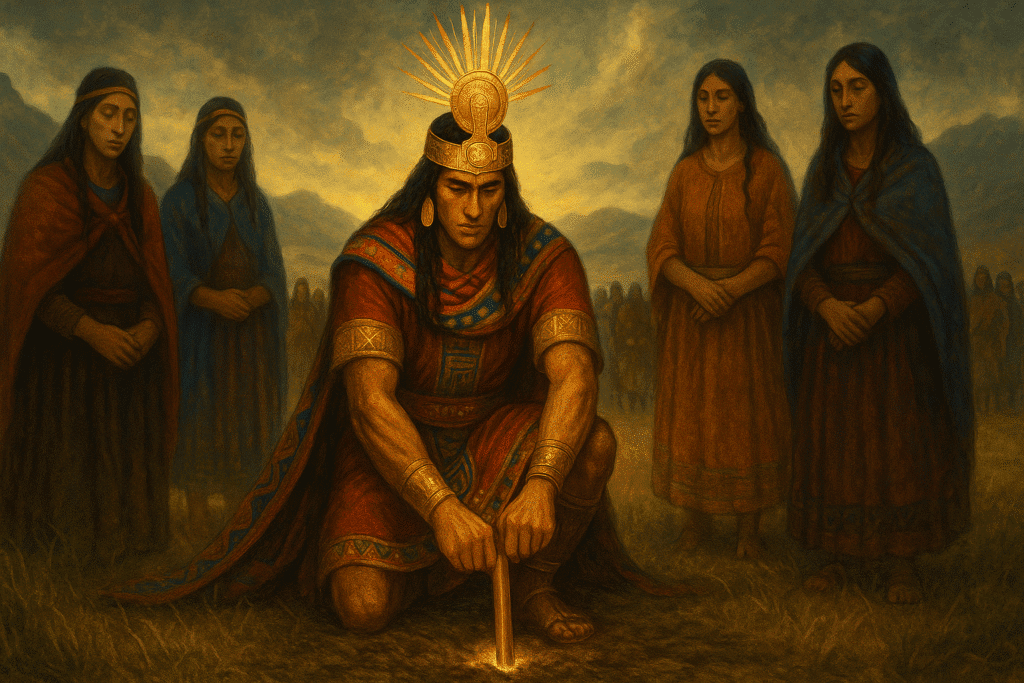
They soon arrived at the place that the God Inti had called the 'Navel of the World', which was known as Qosqo (Cusco). Thus, they founded the Inca Empire. Only Ayar Manco remained, proving that he was no ordinary man. He was given the name Manco Cápac, meaning 'great chief' or 'powerful chief', and he made Mama Ocllo the Qolla and his sisters his wives.
From this place, they transmitted their teachings to other peoples, establishing relationships and increasing the size of the empire. They encountered some rebellious peoples, whom they subdued with the help of the Ayar brothers. Ayar Auca watched over them from the sky, Ayar Uchu shared his wisdom, and Ayar Cachi protected them from the cave.
🏛️ Variations on the Legend
📖 Version by Juan de Betanzos (1551)
Origin
Cuxirimay Ocllo, a noble Inca and the wife of Betanzos, narrates the official Cusco tradition.
Story
- The Sun God orders the four brothers and their wives to leave the cave of Pacaritambo.
- Ayar Cachi was extremely strong and violent, and his brothers tricked him into returning to the cave to fetch some objects, sealing him inside with stones.
- The brothers continue their journey. Ayar Uchu turns into a huaca in Huanacauri to protect the people.
- Ayar Auca turns to stone before entering Cusco.
- Ayar Manco enters the valley, sinks his golden rod into the fertile soil and founds Cusco.
Pairings
- Ayar Manco → Mama Ocllo
- Ayar Cachi → Mama Huaco
- Ayar Uchu → Mama Ipacura
- Ayar Auca → Mama Raua
📜 Version by Pedro Sarmiento de Gamboa (1572)
Origin
Collected at the behest of Viceroy Toledo, with testimonies from curacas and amautas.
Story
- It originates from Pacaritambo and has the same mission, but with different female roles.
- Ayar Cachi continues to be feared and remains imprisoned, but he has another wife: Mama Kora.
- Ayar Uchu remains in Huanacauri as a sacred idol, and his wife is Mama Raua.
- Ayar Auca turns to stone before reaching Cusco; his wife is Mama Huaco.
- Manco founds Cusco as an envoy of the Sun.
Pairings
- Ayar Manco → Mama Ocllo
- Ayar Cachi → Mama Cora
- Ayar Uchu → Mama Raua
- Ayar Auca → Mama Huaco
📖 Version by Juan de Betanzos (1551)
Origin
A Jesuit who combines earlier written sources with later oral traditions.
Story
- Maintains the pattern of departure from Pacaritambo and progressive elimination of brothers.
- It mentions Mama Cora/Mama Cura as Cachi's wife, merging the two earlier traditions.
- Depending on the variant, Uchu is either married to Raua or Ipacura.
- Auca keeps Huaco as his wife.
Pairings
- Ayar Manco → Mama Ocllo
- Ayar Cachi → Mama Cora or Mama Cura
- Ayar Uchu → Mama Raua or Mama Ipacura
- Ayar Auca → Mama Huaco
📜 Version by Guamán Poma de Ayala (1615)
Origin
'New Chronicle and Good Government' takes a critical and moralising perspective.
Story
- It recounts the Ayar as the ancestors of the Inca lineage, but provides less detail about their wives.
- The text places greater emphasis on the divine mandate of the Sun and Manco Capac's moral role as founder.
- It largely omits the violent episodes between brothers.
- It probably adapts the story to present it as an orderly and legitimate foundation.
Pairings
While it does not specify all of the wives, it recognises Mama Ocllo as Manco's wife.
✨ Conclusion
The legend of the Ayar brothers is a mythical tale not only about the founding of Cusco, but also a symbolic representation of the Andean worldview. Beyond the official narrative, each version of the myth imparts a distinct moral: power demands sacrifice, strength must be balanced with wisdom, and every significant undertaking requires leaders who can listen to both heaven and earth.
The names of Ayar Manco, Ayar Cachi, Ayar Uchu and Ayar Auca still resonate in the mountains and at Andean festivals today, reminding us that the Tahuantinsuyo was born of a pact between the divine and the human. Its centre, the Qosqo, is much more than a city; it is the ancestral heartbeat of a people.