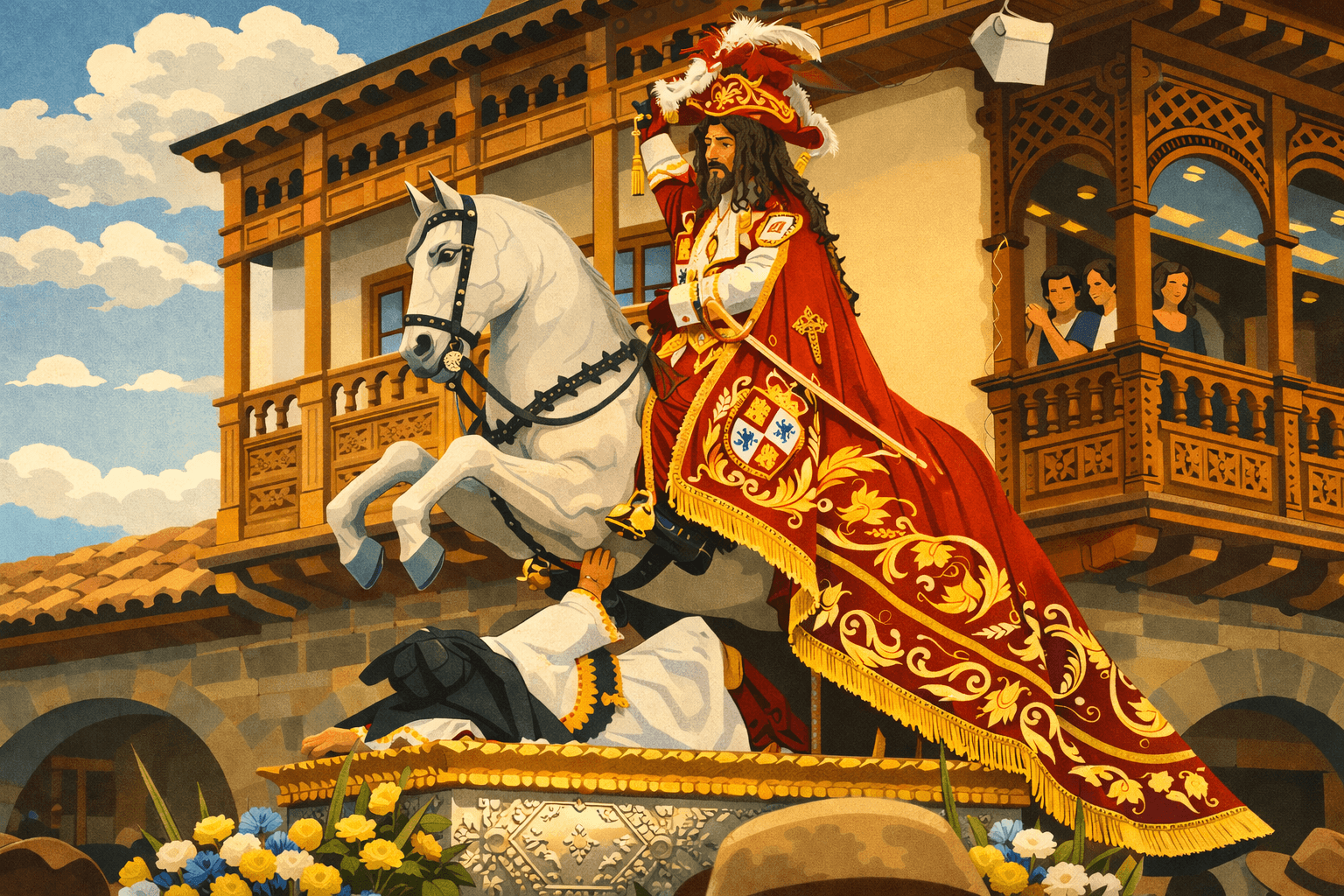
Some figures have stories that are not confined to sacred texts or a particular time period. James (Santiago in Spanish) the Apostle is one of them.
Although his name originated on the shores of the Sea of Galilee, devotion to him crossed continents, empires and cultures, taking root in the Andes and becoming an integral part of the faith and tradition in Cusco.
Known in the Bible as James the Greater, he was one of Jesus's closest disciples and, over the centuries, he has become a symbol of protection, identity and syncretism.
In Cusco, his image represents not only the Christian apostle, but also the complex interplay between European beliefs and the Andean worldview, where faith transforms and adapts without disappearing.
📜 Who was James the Greater?
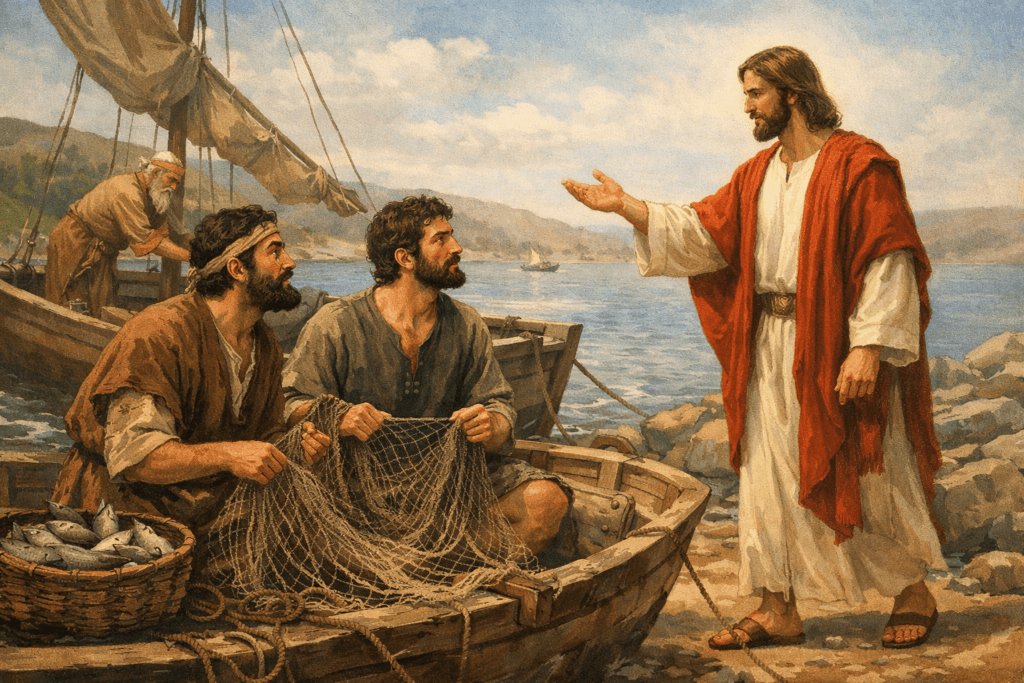
James, also known as James the Greater, was one of Jesus' twelve apostles and the brother of John the Evangelist. They were both sons of Zebedee, a fisherman from the Sea of Galilee.
The epithet "the Greater" does not refer to a spiritual hierarchy, but is used to distinguish him from another apostle with the same name, James the Lesser.
From the earliest Gospel accounts, James is portrayed as a man of strong and determined character.
Together with his brother, he was called by Jesus to be his disciple and was given the name "Boanerges", meaning "son of thunder", reflecting his intense temperament and absolute commitment to the mission he was about to undertake.
James in the Gospels
James was one of the three disciples who were closest to Jesus, alongside Peter and John. He was present at pivotal moments in the Christian narrative, including the Transfiguration and Jesus' agony in the Garden of Gethsemane.
These episodes depict him not only as a witness, but also as an active participant in the most profound and human moments of Christ's life.
His constant presence in these passages reveals not only a firm faith, but also a humanity marked by doubts, emotions and the process of learning.
The martyrdom of James: faith until death
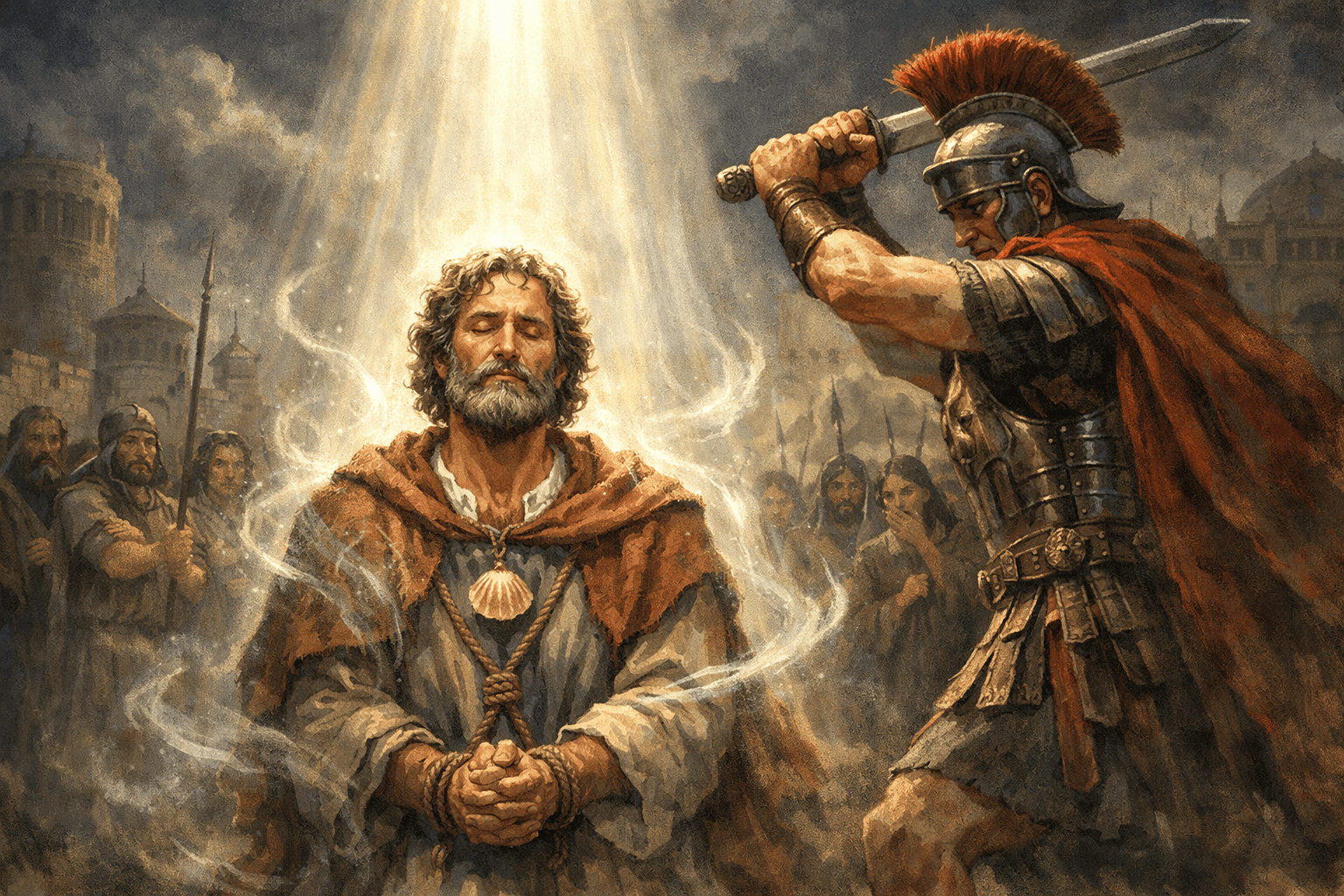
He was the first apostle to die, executed in Jerusalem by order of King Herod Agrippa I around 44 AD.
This event marked a turning point in the history of early Christianity, establishing the apostle as a symbol of total devotion and fidelity.
James' death did not extinguish his memory; quite the contrary, it strengthened it. His sacrifice marked the beginning of a devotion that grew over time, fuelled by stories, traditions and beliefs that transcended the biblical realm.
The birth of his devotion
Following his martyrdom, the figure of James began to spread beyond Jerusalem. It is believed that his remains were transferred to the Iberian Peninsula, which, centuries later, became one of the most important pilgrimage centres in the Christian world: Santiago de Compostela.
From then on, James ceased to be merely an apostle and became a powerful symbol, protecting peoples and guiding pilgrims as he played a central role in spreading Christianity.
His image was adapted to different historical and cultural contexts, which is why his devotion travelled so far, taking root even in territories such as Peru and Cusco.
🙏 The spread of His devotion throughout the world
Following his martyrdom, James the Greater's influence spread beyond the biblical sphere, becoming one of the most venerated saints in Christianity and gaining a strong presence in Europe and America.
His presence was particularly strong in Europe and later in the Americas, where his image was adapted to fit each cultural context.
- Spain: According to Christian tradition, James evangelised this region. Over time, he became the patron saint of Spain.
- Santiago de Compostela: Considered the main centre of veneration for James. One of the most significant Christian festivals takes place here: the way of St. James, a pilgrimage route attracting thousands of people every year.
- Europe: His image spread widely as a protector and defender of the faith, and he was venerated in churches, monasteries and on pilgrimage routes.
- America: James arrived on the American continent, where he was adopted as the patron saint of cities, towns and regions, particularly in the Andes.
🌄 James' arrival in Peru
Devotion to James the Apostle arrived in Peru with the first processes of conquest and evangelisation in the 16^(th) century.
James was a powerful symbol for the Spanish Crown, representing the protective apostle associated with victory, order and the expansion of the Christian faith into new and unknown territories.
During the viceregal period, James was incorporated into Peruvian religious imagery.
Often depicted on horseback with a sword, his image was used as a catechetical and symbolic element in evangelisation campaigns.
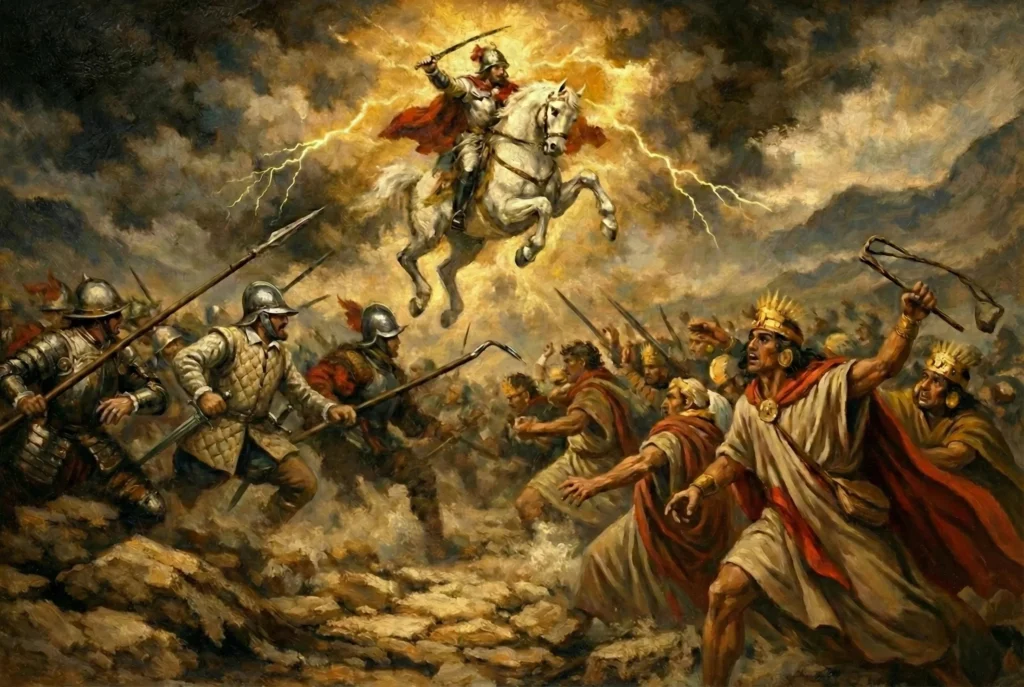
However, this was not a one-way process. In the Andes, the figure of James began to interact with deeply rooted pre-Hispanic beliefs. He became associated with Illapa.
Through this process of syncretism, his image acquired new meanings.
Andean communities began to reinterpret James through their own worldview, incorporating him into their local symbolic universe.
As a result, James ceased to be solely the saint of the Spanish and became a complex presence in the Andes: he was feared, respected and venerated.
🎆 The Feast of James in Cusco
Main Day
Celebrated every 25 July, the Feast of James is one of the most important religious and cultural events in the Cusco calendar.
Devotion is expressed through masses, processions and traditional dances.
Beyond the religious aspect, the Feast of James is an opportunity for the community to gather, celebrate their identity and remember their heritage.
Presence in Holy Week
Although Holy Week in Cusco is mainly characterised by the figure of Christ and other invocations, James the Apostle maintains a symbolic presence within the city's religious calendar.
He is one of the saints who accompany and give context to the most solemn Christian celebrations.