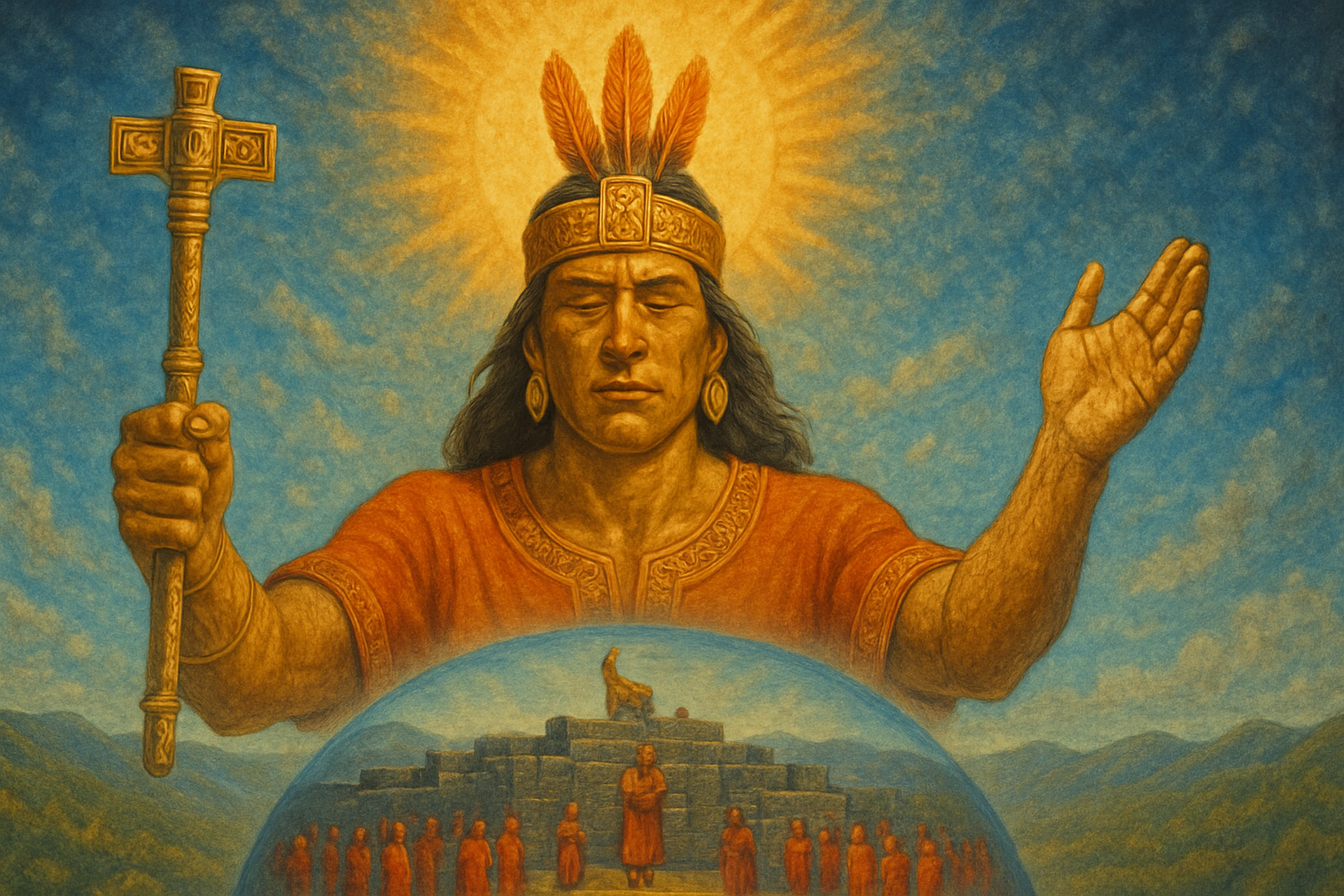
When the first rays of dawn kiss the snow-capped peaks of the Andes, the Andean people believe that Inti is awakening the world. His light warms the earth, marks the sowing and harvesting cycles, guides caravans, blesses families and reminds everyone that life depends on the golden fire in the sky.
In the Tahuantinsuyo empire, Inti was not just a god; he was the Father of the Incas, the source of their authority and the guardian of cosmic order. His cult united the spiritual and the political, the agricultural and the celestial. Temples bathed in gold were erected in his honour, cities were laid out in alignment with the solstice and the great festival of Inti Raymiwas celebrated — a sacred moment when the sun and man renewed their eternal pact.
To know Inti is to understand how the Incas viewed the sky, seeing it not as a distant star, but as a close, protective, and omnipresent father.
☀️ Who is the God Inti?
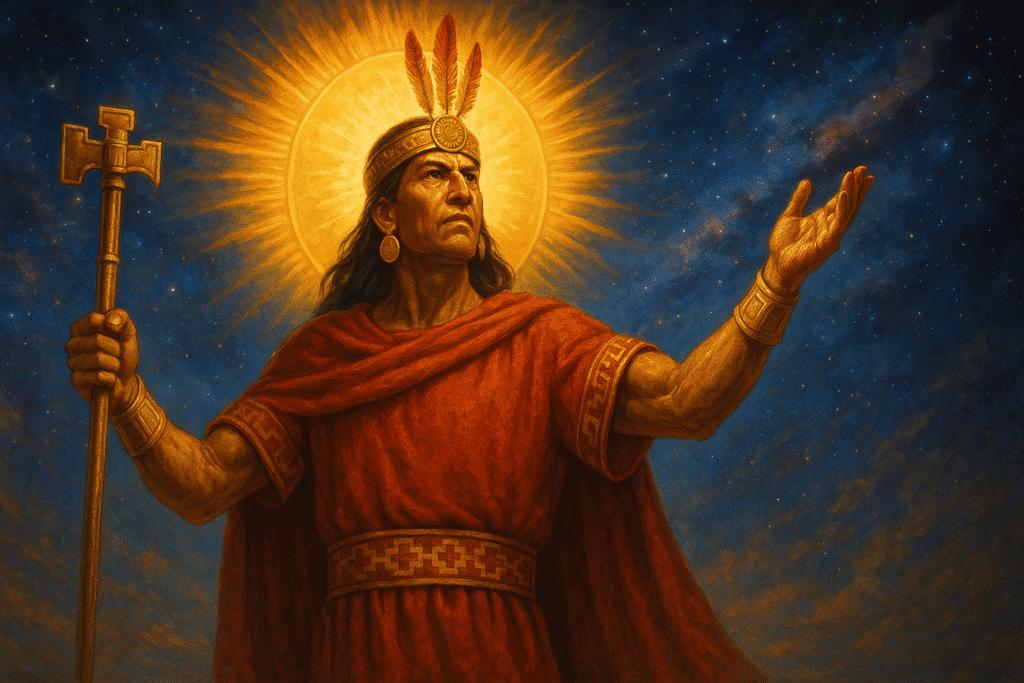
In Inca and pre-Inca religion, Inti is the god of the sun and one of the most powerful deities in the Andean pantheon. Considered the father of the first Inca, Manco Cápac, he was also the protector of all the people and was responsible for ensuring life, abundance and order on Earth. For the Incas, Inti was:
- The giver of life and warmth that makes agriculture possible.
- The one who marks sacred times through his movement across the sky.
- The father of the Inca and guarantor of his right to rule (the Inca was considered the “son of the Sun”).
His presence could be felt everywhere: in the dawn that heralded the day, in the midday sun that blessed the crops and in the sunset that reminded us of the eternal cycle of life. Worshipping Inti also meant honouring the continuity of that cycle, on which the survival of the entire Tahuantinsuyo depended.
📜 Etymology and meaning of Inti
The word 'Inti' probably originates from the ancient languages of Proto-Quechua and Puquina, which predate classical Quechua. While its exact origin is still the subject of debate among linguists and historians, its meaning is clear and universal.
- Inti = Sun
In the Andean world, the term referred not only to the star, but also to the deity that inhabited it. For the Incas, the Sun was not a celestial object, but a living, conscious being, capable of hearing prayers, granting blessings, and punishing wrongdoings.
🧬 Mythical Origin of the God Inti
Chronicles and oral traditions offer various versions of Inti's birth, but all agree that his power comes from a higher creative force.
🔸 Wiracocha's son
Según las crónicas Garcilaso de la Vega, el Dios Inti nació como hijo de Wiracocha, junto a la Diosa Quilla. Ambos fueron enviados a iluminar el mundo: Inti para el día y Mama Quilla para la noche.
🔸 Joint creator with the Moon
En los relatos de Huarochirí, Inti y Mama Killa fueron creados juntos y enviados a recorrer el firmamento, estableciendo el ciclo día-noche y las estaciones, esenciales para la vida.
🔸 Link with the Inca lineage
Según el mito fundacional del Lago Titicaca, Inti envió a sus hijos, Manco Cápac and Mama Ocllo, with a golden rod to find the place where Cusco would be founded. There, where the rod sank into the fertile soil, the capital of Tahuantinsuyo was born.
🔖 Myths associated with the God Inti
🔹 Myth of Manco Capac and Mama Ocllo
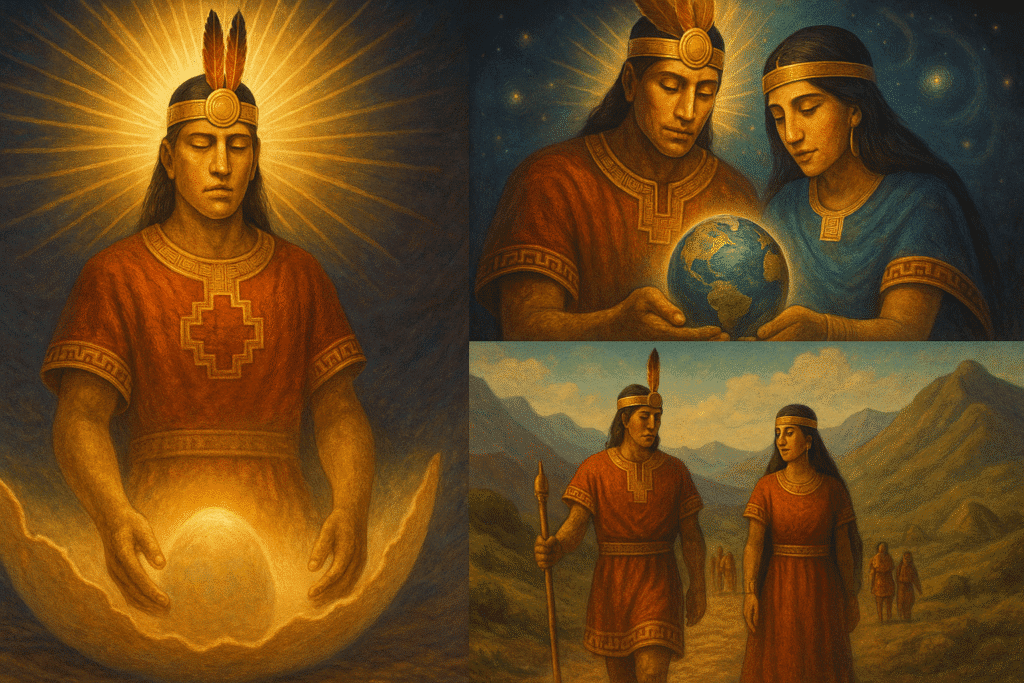
This is one of the most famous stories about the origin of the Incas. According to chroniclers such as Garcilaso de la Vega and Juan Diez de Betanzos, el dios Inti vio a los pueblos andinos viviendo sin leyes ni conocimientos. Entonces decidió enviar desde las aguas sagradas del Lago Titicaca a sus hijos: Manco Cápac and Mama Ocllo.
Les entregó una vara de oro con la orden de buscar el lugar donde esta se hundiera fácilmente en la tierra, señal de fertilidad y buen augurio. Después de un largo viaje, llegaron al valle del Cusco, donde la vara desapareció en el suelo. Allí fundaron la capital del Tahuantinsuyo y enseñaron a los hombres a cultivar y a las mujeres a hilar y tejer.
🔹 The birth of the first Incas from the Sun
Otra versión del origen incaico conocida como la leyenda de los Hermanos Ayar, habla de cuatro hermanos y cuatro hermanas que emergieron de las cuevas de Pacaritambo. Entre ellos estaba Ayar Manco (luego Manco Cápac), quien guiado por la voluntad de Inti, se convirtió en el fundador del Cusco.
Este mito comparte con el del Lago Titicaca la misma idea central: el Sol como fuerza tutelar que marca el destino y el lugar de origen del pueblo inca.
🌌 Cosmic and social function
En la visión andina del universo, nada existe aislado: todo forma parte de un tejido sagrado. Dentro de ese entramado, Inti ocupa el plano más alto del Hanan Pacha (mundo superior) y actúa como el gran regulador de la vida.
💠 En el plano cósmico
- Luz y calor: Inti es el padre que alimenta a la tierra, permitiendo que germinen las semillas y que los animales y las personas vivan.
- Orden del tiempo: su recorrido diario marca el ritmo de los días y sus posiciones en el cielo señalan solsticios y equinoccios, momentos clave para la agricultura y los rituales.
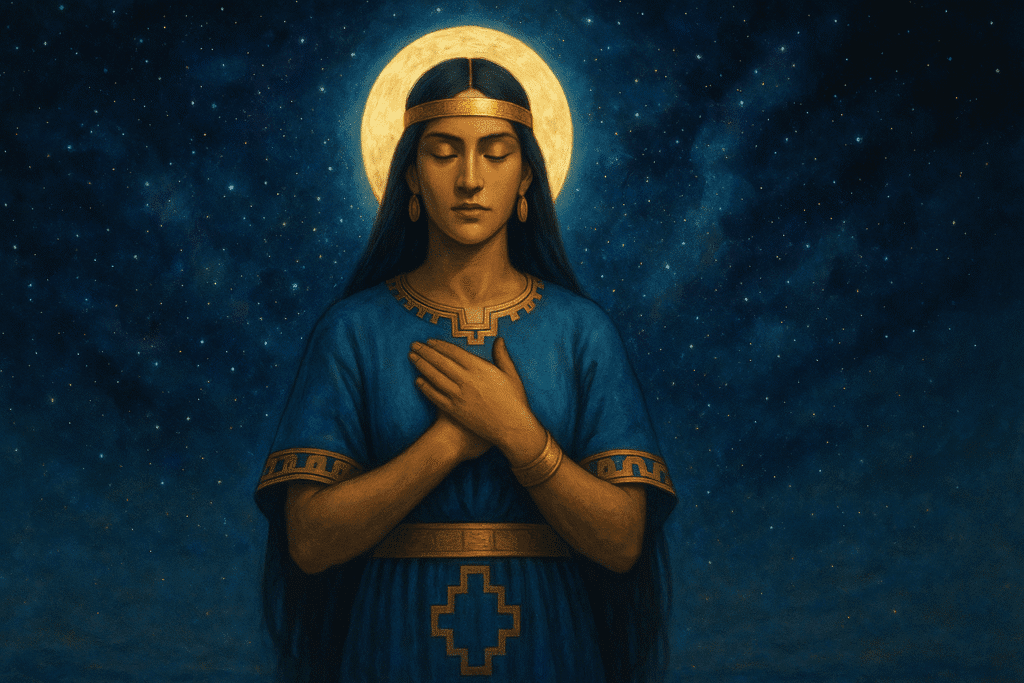
- Dualidad sagrada: su complemento es Mama Killa (la Luna), con quien mantiene el equilibrio entre lo masculino y lo femenino, el día y la noche, lo expansivo y lo cíclico.
💠 En el plano social
- Guía y legitimidad: el Inca, considerado “hijo del Sol”, gobernaba con la autoridad que le confería su linaje divino. Obedecer al Inca era obedecer a Inti.
- Calendario agrícola y ceremonial: las labores de siembra y cosecha se planificaban observando la salida y puesta del Sol, así como su relación con las estrellas y montañas sagradas.
- Alimento espiritual: su luz no solo nutría los campos, sino también el espíritu, recordando a las comunidades la importancia de vivir en armonía con el cosmos.
In the Andean worldview, Inti was not a distant god: he was present in every sunrise, in the warmth that caressed the crops, and in the light that guided the paths.
🎆 The Inti Raymi Festival
Every 24 June, at the height of the Andean winter solstice, Cusco renews its connection with the sun. The Inca, his court and thousands of people gathered for the most important ceremony in the Tahuantinsuyo, Inti Raymi to thank Inti and ask him to return his strength and warmth. Through songs, dances and offerings, the sacred alliance between the cosmos, the Earth and the people was renewed.
🌄 Symbolic Representations
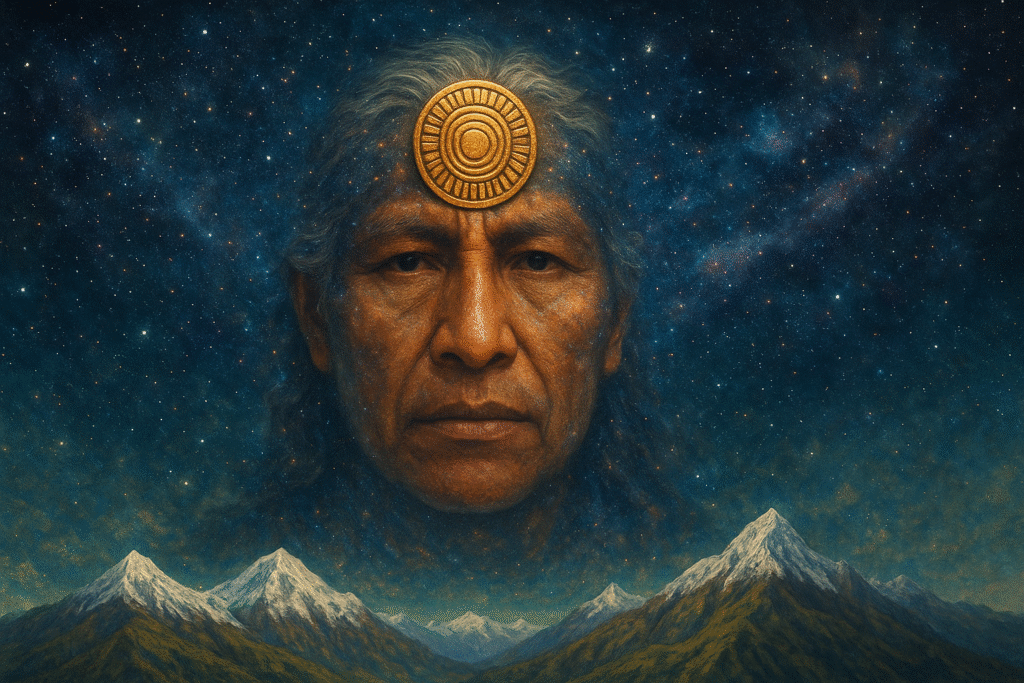
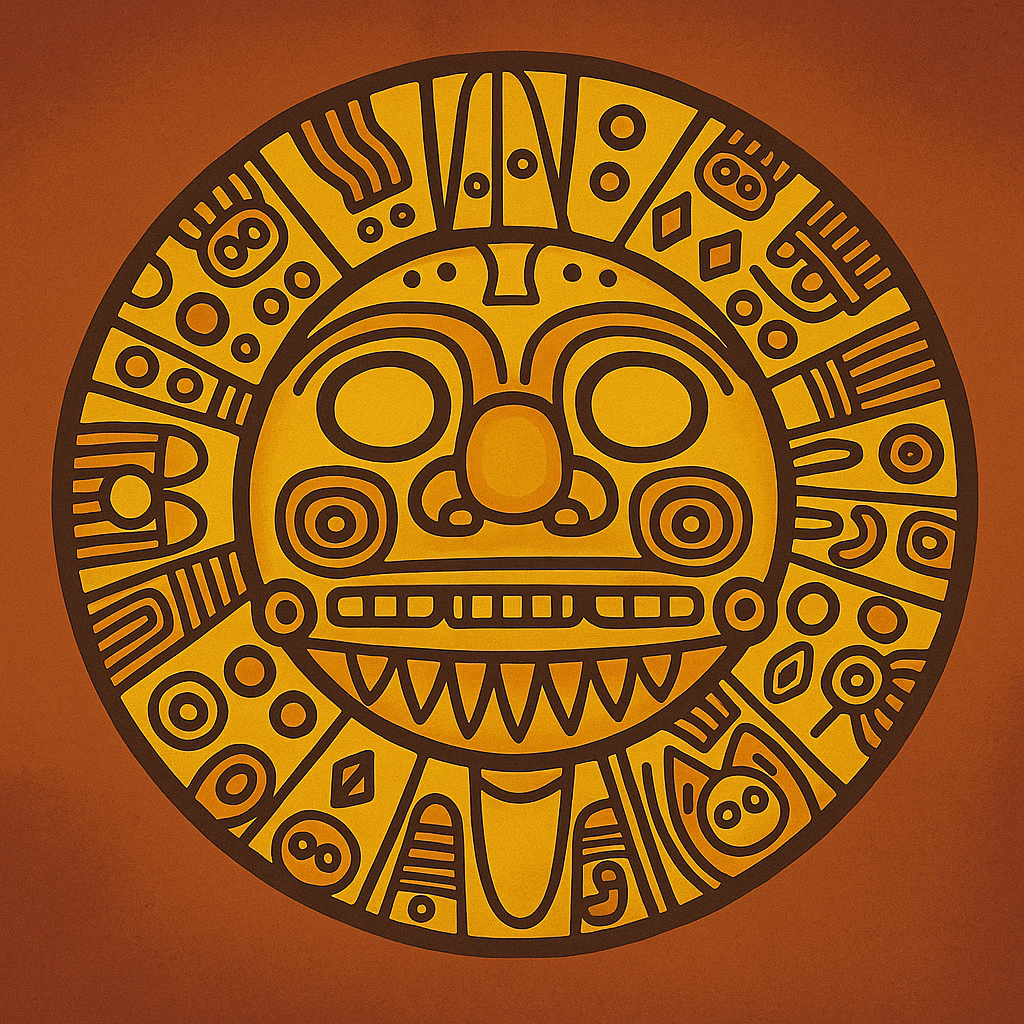
Inti was often depicted as a golden disc with a human face surrounded by rays radiating light and power. His temples, such as the Qoricancha temple, were aligned with the sunrise or sunset on significant dates. Images of Inti adorned textiles, ceramics and carvings, reminding people that the sun not only illuminated the fields, but also guided the destiny of the empire.
🧠 Interpretation and legacy
The cult of Inti was not only religious, but also political and ideological. The Sun God legitimized the supremacy of the Incas and their control over other peoples. It was a form of cosmopolitics, where the order of the universe justified the social order and imperial rule.
Although the worship of Inti was banned when the Spanish arrived, elements of it survived through religious syncretism, patron saint festivals that coincide with solstices and the oral traditions of Andean peoples.
✨ Conclusion
Inti was more than just a sun god; he was the embodiment of time, agriculture, and power in the Tahuantinsuyo empire. Honouring him was ensuring life itself. Even though centuries have passed, his light still shines in the mountains and in the memory of the Andes.